TL;DR
Four Crew 11 astronauts are back on Earth after NASA ordered an early return from the International Space Station due to a medical concern. The agency says the affected crew member is in stable condition, and the mission ended with a routine splashdown off Southern California after 167 days in orbit.
Why This Matters
This early return is a reminder that even well-planned space missions must adapt quickly when health issues arise. According to NASA, this is the first time one of its long-duration spaceflights has been cut short specifically over a medical concern, underscoring both the risks astronauts face and the conservative approach mission managers now take to crew safety.
The decision highlights how space agencies balance medical privacy with transparency. NASA has not identified the astronaut involved or described the condition, citing strict privacy rules. Yet the episode shows how much infrastructure now exists to bring a crew home safely on short notice, using commercial spacecraft such as SpaceX’s Crew Dragon as both transport and an on-orbit lifeboat.
The timing also matters for the wider spaceflight calendar. The International Space Station (ISS) will temporarily operate with a smaller U.S. segment crew until the next mission, Crew 12, launches. That flight is being evaluated alongside preparations for Artemis 2, the planned first crewed mission to the vicinity of the moon in more than 50 years, making this a pivotal period for U.S. human spaceflight.
Key Facts & Quotes
According to mission coverage published by CBS News on Jan. 15, 2026, Crew 11 undocked from the ISS and splashed down in the Pacific Ocean off San Diego at 3:41 a.m. EST on Thursday. The landing, under four large parachutes, ended a 167-day stay in orbit.
The four-person team included commander Zena Cardman, pilot Mike Fincke, Japanese astronaut Kimiya Yui and Russian cosmonaut Oleg Platonov. They returned six days after NASA managers decided to cut the mission short so one astronaut could receive more detailed medical evaluation on Earth.
“On behalf of SpaceX and NASA, welcome home, Crew 11,” a SpaceX flight controller radioed as the capsule bobbed in the ocean. Cardman replied, “It’s so good to be home, with deep gratitude to the teams that got us there and back.” Recovery teams hoisted the Crew Dragon onto a support ship, where flight surgeons began standard post-landing checks.

Crew 11: Cosmonaut Oleg Platonov is now out of the spacecraft. Crew egress is now complete and despite a medical issue that prompted an early return to Earth, all four crew members appeared healthy and were in obvious good spirits as they left the spacecraft pic.twitter.com/1g9QCSEFjd
— William Harwood (@cbs_spacenews) January 15, 2026
NASA Administrator Jared Isaacman told reporters after splashdown that all four astronauts were undergoing routine exams. “The crew member of concern is doing fine,” he said, adding that further health updates would be shared “as soon as it’s appropriate to do so.” The agency has not released the astronaut’s name or diagnosis.
The medical issue reportedly arose the day before a planned spacewalk by Cardman and Fincke. NASA’s chief medical officer said the situation did not require an emergency return, but it was serious enough that managers opted to bring the entire crew home early, standard practice when one ISS astronaut must leave due to illness or injury.
In a long post on LinkedIn, Fincke wrote that the crew was in good shape and called the decision “the right call,” according to the CBS account. During a change-of-command ceremony earlier in the week, Fincke formally handed over station leadership to Russian cosmonaut Sergey Kud-Sverchkov, with all four Crew 11 members appearing in good spirits.
Yui, flying for Japan’s JAXA space agency, marked the impending departure with a post on X that included a photo of snow-covered Mount Fuji taken from orbit. “Hello! The day has finally arrived for our departure to Earth,” he wrote, adding that Mount Fuji “bid us farewell, adorned with a touch of crimson makeup from the setting sun.”

Under a long-standing “seat-swap” agreement between NASA and Russia’s Roscosmos, one American rides on each Soyuz spacecraft and one Russian flies on each Crew Dragon. As NASA has explained in ISS program materials, this guarantees that at least one U.S. and one Russian crew member remain aboard the station to operate their respective systems if any vehicle must depart early.
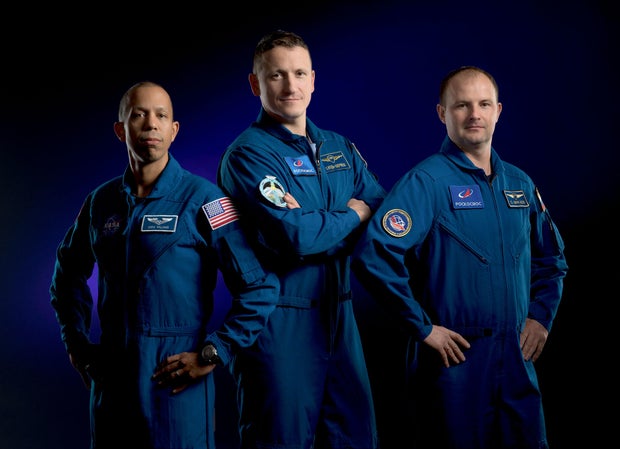
With Crew 11’s departure, NASA astronaut Chris Williams is temporarily the only American on the ISS, working alongside two Russian crewmates. Crew 12-led by NASA astronaut Jessica Meir and including NASA rookie Jack Hathaway, European Space Agency astronaut Sophie Adenot and veteran Russian cosmonaut Andrey Fedyaev, is officially scheduled to launch Feb. 15. NASA and SpaceX are assessing whether to move that date slightly to ease traffic with preparations for the Artemis 2 lunar mission.
What It Means for You
For most people, this latest update from low Earth orbit will not change day-to-day life. But it does show how human spaceflight is maturing into a steady, if still risky, part of national infrastructure, funded by taxpayers and increasingly flown on privately built spacecraft.
The Crew 11 experience demonstrates that NASA is willing to shorten a high-profile mission rather than take chances with astronaut health. As more missions launch, including eventual commercial and tourist flights, that cautious approach and the medical systems behind it will shape how safe space travel feels to the public.
Looking ahead, readers may want to watch how NASA communicates about astronaut health, how quickly Crew 12 is launched to restore full staffing on the ISS, and whether schedules for Artemis 2 shift. These decisions will influence not only future exploration of the moon, but also the reliability of the ISS as a research platform for climate science, medicine and technology.
What do you think: How transparent should space agencies be about astronaut health issues when public safety is not directly at risk?
Sources: CBS News report on the Crew 11 mission and early return, Jan. 15, 2026; NASA International Space Station program background materials, updated 2023; NASA Artemis program overviews, updated 2024.