TL;DR
Australia’s prime minister has told U.K. leader Sir Keir Starmer that his government would support legislation to remove Andrew Mountbatten-Windsor from the royal line of succession, following the royal’s recent arrest on suspicion of misconduct in public office.
Why This Matters
The line of succession to the British throne underpins the stability and continuity of the U.K.’s constitutional monarchy. Any move to remove a senior royal from that line is rare and carries political, legal, and symbolic weight, especially when it follows criminal allegations.
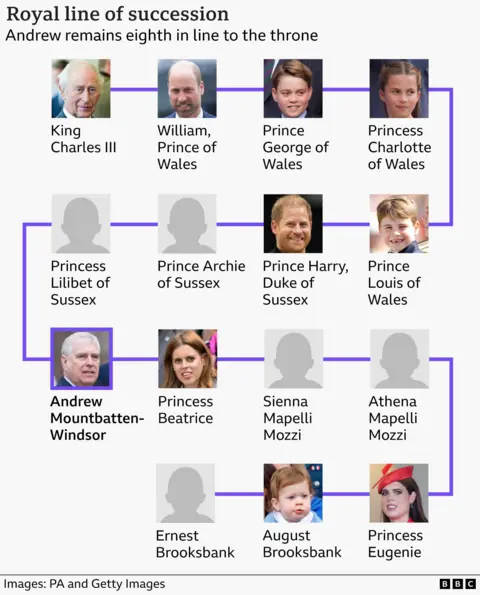
Because King Charles III is head of state not only in the United Kingdom but also in 14 other Commonwealth countries, including Australia, changes to succession rules can ripple well beyond Britain’s borders. Canberra’s support signals that at least one key realm is prepared to endorse a formal break between the monarchy and Andrew Mountbatten-Windsor, the King’s brother and currently eighth in line to the throne.
The case also feeds into broader debates about royal accountability and the future of the monarchy in countries where the King remains head of state. For many readers, this latest update will be watched alongside long-running discussions in Australia and elsewhere about whether to retain the monarch or move toward a republic.
Key Facts & Quotes
In a letter to U.K. Prime Minister Sir Keir Starmer, Australian Prime Minister Anthony Albanese wrote that his government “would agree to any proposal to remove [Andrew Mountbatten-Windsor] from the line of royal succession,” according to excerpts released by his office. Albanese added, “I agree with His Majesty that the law must now take its full course and there must be a full, fair and proper investigation. These are grave allegations and Australians take them seriously.”
The letter from Australian PM Anthony Albanese to UK PM Sir Keir Starmer.
He says Australia “would agree to any proposal” to remove Andrew Mountbatten-Windsor from the royal line of succession.
Albo is the first leader of a Commonwealth realm to confirm support for such a move. pic.twitter.com/PHk0dntNex
— Ben Bloch (@realBenBloch) February 23, 2026
Andrew, the King’s brother, remains eighth in line to the throne despite being stripped of his titles, including “prince,” in October amid pressure over his ties to convicted sex offender and financier Jeffrey Epstein, according to a report from a major U.K. public broadcaster published on 23 February 2026. The same report notes that he was arrested on Thursday at Sandringham, the King’s Norfolk estate, on suspicion of misconduct in public office, then released under investigation 11 hours later by Thames Valley Police. He has consistently and strenuously denied any wrongdoing.
The U.K. government is considering legislation that would formally remove him from the line of succession. Any change would require an act of Parliament, approval by Members of Parliament and peers, and royal assent from the King. It would also need backing from the 14 Commonwealth realms where King Charles is head of state, including Australia. Buckingham Palace has not publicly commented on the potential legislation.
Defence Minister Luke Pollard told the same broadcaster that preventing Andrew from ever becoming King would be “the right thing to do,” regardless of the outcome of the police investigation. Police searches at Sandringham concluded late on Thursday, while searches at Andrew’s former residence, a 30-room property in Windsor, were understood to have continued into the weekend.
What It Means for You
For most people in the U.K., Australia, and other Commonwealth countries, any change to the royal line of succession will not affect daily life or existing laws. However, it does shape who might eventually serve as head of state and how the monarchy responds when senior members face serious allegations.
In the near term, the key questions are whether the U.K. government will formally introduce a bill, how quickly Parliament moves on it, and whether all affected Commonwealth realms agree. The progress of the police investigation into Andrew’s alleged misconduct in public office will also be closely watched. For readers following global news on institutions, accountability, and constitutional change, this story offers a window into how modern monarchies handle crisis and reform.
What do you think: should decisions about royal succession in shared monarchies rest mainly with the U.K., or be taken collectively by all Commonwealth countries that share the King as head of state?
Sources – Information in this article is based on: (1) a report from a U.K. public broadcaster published on 23 February 2026, and (2) excerpts from a letter by Australian Prime Minister Anthony Albanese to U.K. Prime Minister Sir Keir Starmer, released by the Australian government in February 2026.