TL;DR
Global energy prices jump, and stock markets fall after threats to close the Strait of Hormuz disrupt a crucial oil and gas shipping route.
Why This Matters
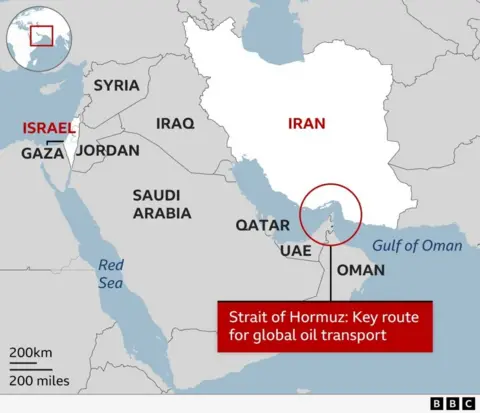
The latest tension around the Strait of Hormuz, a narrow channel off Iran that connects Gulf producers to world markets, is rippling quickly through the global economy. Around one-fifth of internationally traded oil and a large share of liquefied natural gas move through this corridor, according to estimates from the U.S. Energy Information Administration and the International Energy Agency. When traffic there slows or stops, prices tend to rise worldwide.
Higher oil and gas costs feed into everyday expenses: gasoline and diesel for drivers, jet fuel for airlines, and energy for heating, cooling, and manufacturing. If those increases last, they can push up inflation and make it harder for central banks in the U.S., UK, and Europe to cut interest rates as planned. That affects mortgage costs, retirement portfolios, and business investment.
Geopolitical flare-ups in the Gulf have triggered past price shocks, from the 1980s tanker wars to the 2019 attacks on Saudi oil facilities. Today’s disruption adds to an already fragile backdrop marked by past supply cuts, ongoing wars, and efforts to shift away from fossil fuels. Markets are reacting not just to current damage, but to the risk that a longer standoff could tighten supplies for months.
Key Facts & Quotes
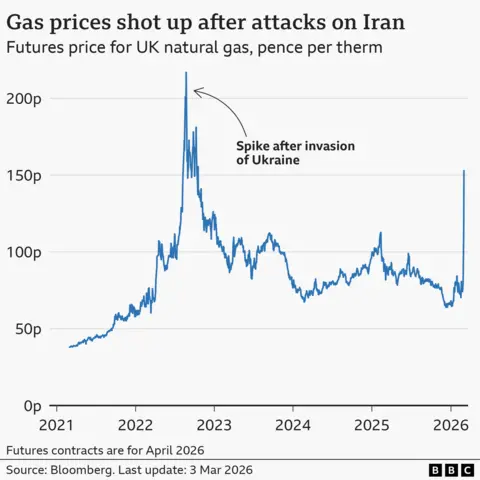
Natural gas prices jumped more than 30% on Tuesday, the fastest rise in over three years, after an Iranian military adviser warned his country would “set fire to anyone who tries to pass through” the Strait of Hormuz. Benchmark oil prices climbed more than 5% to about $82 a barrel, with analysts warning they could top $100 if disruption continues.
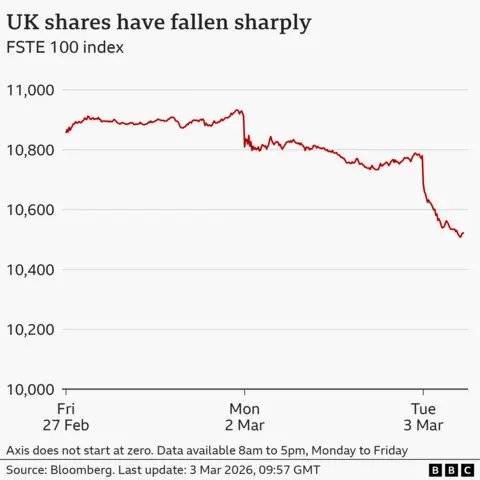
Major stock indexes slid in response. The UK’s FTSE 100 fell about 2.5%-2.6%, while Germany’s DAX and France’s Cac 40 dropped roughly 3.2% and 2.6%. In Asia, Japan’s Nikkei closed 3.3% lower, and South Korea’s Kospi fell more than 7%, with export-reliant firms such as Toyota, Samsung, and SK Hynix among the hardest hit.
Shipping has largely halted through the Strait after several vessels were attacked in recent days. Industry data from the London Stock Exchange Group shows the cost of hiring a supertanker from the Middle East to China surged to more than $400,000, nearly double last week’s level. Sanne Manders, president of logistics platform Flexport, said the Strait is “effectively closed,” citing both security concerns and insurers’ reluctance to cover voyages.
LONDON, April 16, 2026 — Global energy markets plunged into turmoil today as Iran’s military threatened to close the Strait of Hormuz, the world’s most critical oil shipping lane, triggering immediate 30% gas price spikes and sending Brent crudehttps://t.co/AmnuDJvBJW pic.twitter.com/yjMqghsceB
— Crunchupdates (@itsCrunchupdate) March 3, 2026
Gas prices also spiked after QatarEnergy, one of the world’s biggest gas exporters, halted production following what it described as “military attacks” on its facilities. In Washington, President Donald Trump is set to meet Treasury Secretary Scott Bessent and Energy Secretary Chris Wright to discuss the impact on living costs. Secretary of State Marco Rubio said authorities would unveil steps to “mitigate against” rising energy prices, adding, “Starting tomorrow, you will see us rolling out those phases.”
What It Means for You
For households, the immediate impact will be felt at the pump and, later, on utility bills. Analysts cited in market reports say U.S. gasoline prices could rise by up to 25 cents a gallon if crude holds near $100. In the UK, regulators’ price caps delay changes, but energy suppliers are already warning that sustained high gas and oil prices will filter into bills in the coming months.
Drivers, frequent flyers, and small businesses that rely on transport may face higher costs, while investors could see more market volatility in retirement and college savings accounts. Central banks may move more cautiously on cutting interest rates if inflation ticks back up, which would keep borrowing costs higher for mortgages, car loans, and credit cards.
Much now depends on how long shipping remains disrupted and whether diplomatic efforts can reopen the Strait safely. Policymakers are watching closely for further attacks, any release of strategic oil reserves, and signals from major producers about increasing supply.
How do you think rising energy prices should be balanced against broader security and foreign policy goals?