TL;DR
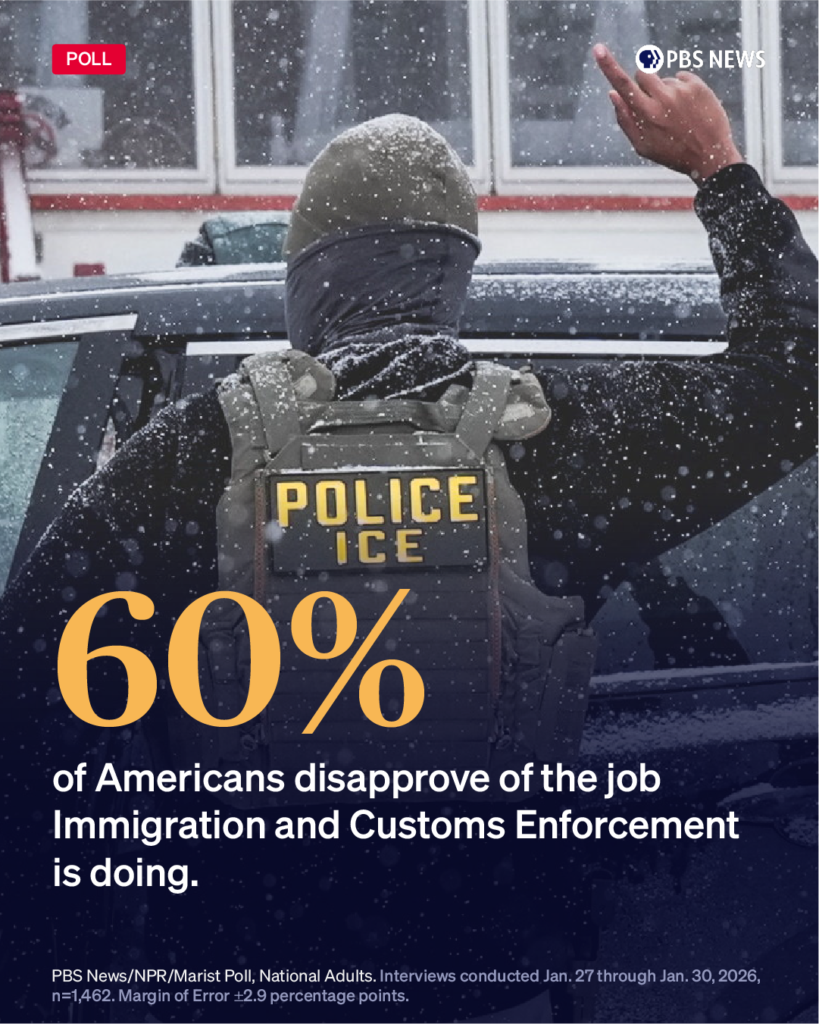
A new national NewsHour/Marist poll finds 65% of Americans believe Immigration and Customs Enforcement (ICE) has gone too far, up sharply from last year, as Congress faces a deadline to keep the Department of Homeland Security funded and open.
Why This Matters
The latest update on public opinion around immigration enforcement comes as lawmakers in Washington weigh whether to attach new limits on ICE to a short-term spending bill. The Department of Homeland Security (DHS), which oversees ICE, is close to running out of money, raising the risk of at least a partial government shutdown if Congress cannot agree on funding.
Immigration and border security remain top issues in the 2024 election year, shaping views of safety, fairness, and the role of federal law enforcement. The poll suggests not only a broad majority disapprove of ICE’s tactics, but that discomfort is growing across party lines, including among some Republican voters who usually back former President Donald Trump’s immigration agenda.
Women, especially in suburban swing districts, emerge as a key group reporting they feel less safe because of ICE activities. Their views could influence competitive House and Senate races where immigration and public safety are central campaign themes. Any DHS funding showdown that spotlights ICE practices may therefore carry political consequences well beyond the immediate budget fight.
Key Facts & Quotes
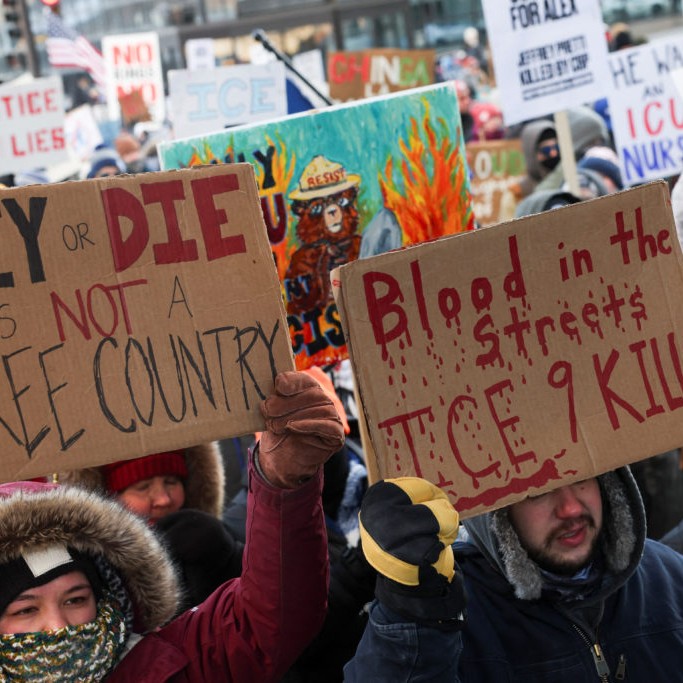
According to a national NewsHour/Marist survey released Feb. 5, 2026, 65% of Americans say ICE has “gone too far” in its actions. That is a notable increase from 54% in June of the previous year. The shift comes after high-profile ICE raids in cities such as Los Angeles and widespread viewing of video showing the fatal encounter of Alex Pretti with ICE personnel.
Concern rose across party lines. While Democrats remain most critical, 27% of Republicans now say ICE has gone too far, up seven percentage points from last year. Political correspondent Lisa Desjardins called that “some of the highest disapproval ratings I have ever seen by Republicans for a Trump policy.”
The poll also asked how ICE affects personal feelings of safety. About 22% of respondents said ICE makes them feel more safe, while 50% said they feel much less safe because of the agency. The gender divide is sharp: 41% of men versus 57% of women report feeling much less safe.
On overall presidential performance, approval remains at 39%, but strong disapproval now stands at 51%, the highest level measured for Trump in this polling series, Desjardins reported in her televised interview.
These opinion shifts land as Democrats push a package of 10 ICE-related reforms in DHS funding talks. Their list includes body cameras, an end to masks for officers, clear identification requirements, limits on enforcement near schools, churches and polling places, judicial warrants for certain actions, cooperation with local investigations, basic standards for detention and use of force, and bans on racial profiling.
New Data For Progress poll: Voters support removing Stephen Miller and Kristi Noem, and think Dems should refuse funding for DHS unless multiple reforms for ICE are put in place (including requiring ICE to focus on deporting convicted criminals — at +48) https://t.co/1DnqB02Tte pic.twitter.com/bO7SGrsCmn
— G Elliott Morris (@gelliottmorris) February 3, 2026
Republican lawmakers have already labeled several items as unacceptable, especially removing masks and requiring officers to identify themselves, citing safety concerns, as well as stricter judicial warrant rules and broader anti-profiling language. Staff-level conversations continue, but Desjardins said a bipartisan deal on ICE reforms currently looks like a “long shot,” making another short-term funding bill more likely.
What It Means for You
For many Americans, this story goes beyond Washington procedure. ICE actions can affect whether families feel safe at work, school, church, or in their neighborhoods, particularly in communities with large immigrant populations. The poll suggests a growing share of the public is uneasy with how immigration enforcement is carried out, even if they support tougher border controls in principle.
If Congress cannot agree on DHS funding, some operations could face disruption, and immigration enforcement priorities may become a central bargaining chip in broader budget talks. Voters aged 35 to 70, who often balance concerns about public safety with worries over government overreach, may want to watch how their representatives talk about body cameras, identification rules for officers, and limits near sensitive locations like schools and polling places.
As the campaign season intensifies, expect both parties to use these poll numbers to argue their case on immigration and law enforcement. How lawmakers respond now could shape not only federal policy toward ICE, but also the tone of the national debate on safety, rights, and accountability.
How do you think immigration enforcement should balance public safety with concerns about civil liberties and community trust?
Sources: National NewsHour/Marist public opinion poll results and on-air interview with correspondents Lisa Desjardins and William Brangham, both on Feb. 5, 2026.