TL;DR
At least 15 people died, and dozens were rescued after a migrant speedboat collided with a Greek coast guard vessel off the island of Chios, as authorities continued searching for any missing passengers.
Why This Matters
The collision near Chios underscores how deadly Europe’s migration routes across the Mediterranean remain, even as overall arrivals have fallen in recent years. Greece is one of the main gateways into the European Union for people fleeing war, poverty, and political instability in regions including the Middle East, Africa, and Asia.
Short sea crossings from Turkey to nearby Greek islands are often made in overloaded or unseaworthy boats, leaving little room for error when weather, currents, or crowded waters come into play. At the same time, EU countries, including Greece, have tightened border controls and asylum rules, adding political pressure around rescue operations and migration enforcement.
The United Nations’ migration agency has warned that hundreds of people may already be missing or dead in the Mediterranean this year alone, even before this latest incident. For readers far from the Aegean, the crash is part of a wider global news story about how countries manage their borders, protect human life at sea, and respond to people on the move.
Key Facts & Quotes
Greece’s coast guard said late Tuesday that a speedboat carrying migrants collided with a patrol vessel off the eastern Aegean island of Chios. Fourteen bodies – 11 men and three women – were initially recovered from the water. Twenty-five survivors, including about 11 children, were taken to a local hospital, along with two injured coast guard officers. One injured woman later died in the hospital, bringing the confirmed death toll to at least 15.
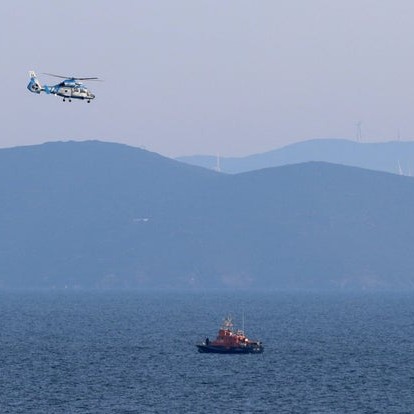
The total number of people on the migrant boat was not immediately clear, and search and rescue operations continued using four patrol boats, an air force helicopter, and a private vessel with divers. Local video showed emergency crews carrying a person wrapped in a blanket from a boat to a waiting vehicle, while others helped two children ashore, one of them limping.
Greek rescuers search for potential missing people after deadly migrant boat collision https://t.co/0GNkAJJD9A pic.twitter.com/f54pKTtWZi
— The Independent (@Independent) February 4, 2026
Hospital staff on Chios were placed on full alert to handle the sudden influx of patients, according to Michalis Giannakos, head of Greece’s public hospital workers’ union, who told a national TV channel that several of the injured required surgery.
Beyond this single incident, the International Organization for Migration (IOM) said last month it was “deeply concerned” by reports of multiple deadly shipwrecks in the central Mediterranean in January, warning that “hundreds of people may be missing at sea or feared dead” and that “the final toll may be significantly higher.” IOM data show the central Mediterranean remains the world’s deadliest migration route, with at least 1,340 deaths recorded there in 2025 and more than 33,000 people dead or missing in the wider Mediterranean since 2014.
What It Means for You
For many in the United States, this latest update from Greece will be one more sign that migration pressures and border policies are no longer only national questions but part of a shared global challenge. Incidents like the Chios collision may influence how European governments debate search-and-rescue duties, border enforcement, and legal pathways for migration – discussions that often echo in U.S. policy circles.
In practical terms, this tragedy is likely to revive calls from humanitarian groups for safer, legal routes and from some governments for tougher controls. As investigations into how the crash happened move forward, watch for possible changes in patrol practices, coordination between Greece and neighboring Turkey, and renewed debate within the European Union over its migration and asylum system.
What do you think governments should prioritize most on dangerous sea routes: stricter enforcement, expanded rescue operations, or creating more legal ways to migrate?
Sources: Official statements from the Hellenic Coast Guard (Feb. 4, 2026); public statements and data from the International Organization for Migration, including its Missing Migrants Project (Jan.-Dec. 2025 and Jan. 2026).