TL;DR
Russia hit Ukraine’s power infrastructure during a deep freeze, knocking out heat and electricity for many. UK Prime Minister Keir Starmer called the strikes “barbaric” as U.S.-led peace talks with Russian and Ukrainian negotiators began in Abu Dhabi.
Why This Matters
Russia’s latest wave of attacks on Ukraine’s energy system comes as temperatures plunge to around -20C (-4F), turning power cuts into a direct threat to life. When electricity and district heating fail in such cold, homes quickly lose heat, water systems can freeze, and hospitals must rely on backup generators.
The strikes also land at a sensitive diplomatic moment. The United States is pushing a new peace framework in talks hosted in Abu Dhabi, while Russia continues to press its battlefield advantage in eastern Ukraine’s Donbas region. The contrast between negotiations abroad and intensified attacks on the ground underscores how fragile any potential agreement remains.
For European allies, disruptions to Ukraine’s energy network raise concerns about broader regional stability, humanitarian needs, and the long-term cost of rebuilding critical infrastructure. For Washington and London, the attacks test whether they can both support Kyiv militarily and sustain diplomatic efforts to end the war. How the world responds now may shape not only the course of the conflict but also future norms around striking civilian energy systems in wartime.
Key Facts & Quotes
UK Prime Minister Sir Keir Starmer condemned Russia’s overnight strikes on Ukraine’s energy facilities as “barbaric and particularly depraved,” noting they came as a severe cold spell gripped the country. He spoke after a call with U.S. President Donald Trump, held hours after power plants and other critical infrastructure in Kyiv and other regions were hit.
UK Prime Minister Keir Starmer said Russia is carrying out barbaric strikes on Ukraine’s energy infrastructure during freezing temperatures. In a call with Donald Trump, he said the attacks were especially vile as temperatures fell below minus 20 C. #Ukraine pic.twitter.com/prudeWdDsl
— NOELREPORTS 🇪🇺 🇺🇦 (@NOELreports) February 4, 2026
The attacks followed a week-long pause that Trump had asked Russian President Vladimir Putin to observe while temperatures dropped sharply. Trump later told reporters that Putin had “kept his word” on the pause and added, “It’s a lot, you know, one week, we’ll take anything, because it’s really, really cold over there.” The Russian president has so far rejected wider calls for a lasting ceasefire.
Top U.S. envoys, including real estate developer Steve Witkoff and Jared Kushner, Trump’s son-in-law and former senior adviser, are meeting Russian and Ukrainian negotiators in Abu Dhabi to discuss a U.S.-proposed peace plan. One of the toughest issues is Russia’s demand that Ukraine cede the remaining parts of the eastern Donbas region it does not yet control. Russia launched its full-scale invasion of Ukraine in February 2022 and has made only slow gains in the area in recent months.
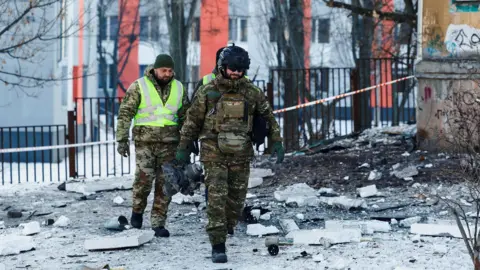
On the ground, Ukraine’s Air Force said more than 100 drones targeted the country early Wednesday, with most intercepted, but strikes and falling debris reported in at least 14 locations. Regional officials reported multiple civilian deaths: in Dnipropetrovsk, a 68-year-old woman and a 38-year-old man were killed; in the Zaporizhzhia region, three people died, and 11 were wounded, including children. Russian-installed authorities in Luhansk said a man and a woman were killed in a drone attack on a minibus, which they blamed on Ukraine.
In Odesa, at least five people were injured and residential buildings damaged, local authorities said. A Kyiv resident, Olena, told Ukraine’s public broadcaster: “My apartment is completely destroyed, there is nothing left. Only some furniture near the walls survived.” Inside Russia, the governor of the Bryansk region reported a “combined attack” by Ukrainian drones and long-range missiles that destroyed a residential building and injured one person, while in Belgorod, officials worked to restore power and water after an earlier strike.
The damage to Ukraine’s energy system is extensive. Local authorities say more than 1,000 apartment blocks in Kyiv are without heating, while a power plant in the eastern city of Kharkiv is reported to be beyond repair. Many residents are sheltering overnight in metro stations, some pitching tents on platforms to escape the cold. Authorities in the capital are opening warming centers and importing additional generators to manage longer blackouts.
Ukraine’s energy minister, Denys Shmyhal, said the overall power situation remains “difficult” and repairs will take time, including at Kyiv’s Darnytsia combined heat and power plant, which he described as “severely damaged.” Ordinary families are weighing whether to stay or move. Psychologist Iryna Vovk, who lives in Kyiv with her daughter while her husband serves at the front, said life in the city was “very awful” due to problems accessing electricity and water. Her daughter, she said, “tries to smile and lead a normal life, but it’s not a normal life.”
What It Means for You
For readers in the United States and elsewhere, the latest update from Ukraine highlights both the human cost of the war and the stakes in ongoing diplomacy. Strikes on power and heating systems in mid-winter increase pressure for more Western air defenses, generators, and humanitarian aid, potentially shaping future funding debates in Washington and European capitals.
The Abu Dhabi talks, while still preliminary, may influence how long the conflict drags on, how high global security risks remain, and how much governments continue to spend on military support. That can affect energy markets, defense budgets, and broader foreign policy priorities. As the war approaches its fourth year, the question is whether battlefield escalation or negotiated compromise will set the tone for Europe’s security-and how much public opinion in democracies will shape leaders’ next moves.
Question for readers: How should the U.S. and its allies balance military aid to Ukraine with efforts to push all sides toward a negotiated peace?
Sources
- Official statements and briefings from Ukrainian regional and military authorities, Feb. 3-4, 2026.
- Public remarks by UK Prime Minister Keir Starmer and U.S. President Donald Trump to reporters, Feb. 4, 2026.