TL;DR
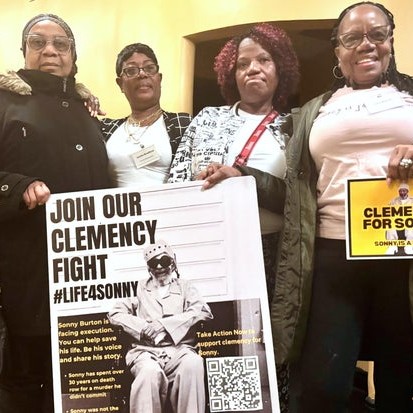
Alabama has set a March 12 nitrogen gas execution for Charles “Sonny” Burton, 75, an accomplice in a 1991 robbery killing, even though he did not pull the trigger.
Why This Matters
The planned execution of Charles “Sonny” Burton highlights two of the most contested issues in U.S. criminal justice: the use of the death penalty for accomplices and the emergence of nitrogen gas as a new execution method.
Burton was convicted under what is often called the felony murder rule, which allows people to be sentenced to death for taking part in a serious felony that leads to someone’s death, even if they did not kill anyone themselves. According to the American Civil Liberties Union, 27 states permit execution in such cases. Supporters say this holds planners and ringleaders accountable; critics argue it can punish people more harshly than the actual shooter.
Alabama also remains at the center of the global news debate over execution methods. The state carried out the country’s first nitrogen gas execution in early 2024, drawing international scrutiny from medical and human rights groups. Many countries have abolished the death penalty altogether, while the United States continues to rely on it in a shrinking number of states.
Burton’s age, the reduced sentence for the gunman, and jurors now questioning their original verdict combine to raise fresh questions about fairness, proportional punishment, and how governors use clemency powers.
Key Facts & Quotes
According to a Feb. 3 report from CBS News, Alabama Governor Kay Ivey has set a March 12 execution date for Charles “Sonny” Burton, now 75, using nitrogen gas. Burton was convicted as an accomplice in the Aug. 16, 1991, robbery of an auto parts store in Talladega, Alabama, during which customer Doug Battle was fatally shot.
CBS reports that Burton was not inside the AutoZone store when Battle was killed and did not fire the gun. Prosecutors portrayed him as the ringleader of the robbery and sought the death penalty. The man who pulled the trigger, Derrick DeBruce, also received a death sentence, but it was later reduced to life imprisonment; DeBruce has since died in prison.
A cross-section of people, including one of Battle’s children and several jurors from Burton’s 1992 trial, urged Ivey to consider clemency. They argue it is unfair to execute Burton when the gunman ultimately received a lesser punishment. Burton’s attorney, Matt Schulz, told CBS News, “We are very disappointed that Governor Ivey has opted to set an execution date for Mr. Burton… and [we] hope and pray that she… stops this unjust execution of a man who has never taken a life.”
#Alabama#CharlesSonnyBurton (See my Twitter)
Charles “Sonny” Burton killed no one. Alabama plans to suffocate him anyway.https://t.co/VKTGWPdqcS
By: @lee_hedgepeth
Clemency for Charles Sonny.
Take action.
Here: https://t.co/QjjIay6uUe
And here: https://t.co/B4gX1CyrQC pic.twitter.com/WFTdvk06fM
— Attika (@Attika_t) February 2, 2026
Ivey wrote in her notice to the prison commissioner that she has no current plans to grant clemency, but she retains authority to “grant a reprieve or commutation, if necessary, at any time before the execution is carried out.” Alabama Attorney General Steve Marshall’s office has opposed clemency, noting in an earlier statement that Burton was convicted of capital murder in April 1992, the jury unanimously recommended death, and “that conviction and sentence have been upheld at every level.”
Six of the eight surviving jurors do not oppose commuting Burton’s sentence, according to the clemency petition cited by CBS. Three of them are actively calling for it. Juror Priscilla Townsend, who has written publicly about her change of heart, told CBS by phone, “It’s absolutely not fair. You don’t execute someone who did not pull the trigger.” In an essay last month, she said the prosecution’s portrayal of Burton as the “ring leader” then “shaped everything” about how the jury viewed the evidence. “I believed it. The jury believed it. I no longer believe it was true,” she wrote.
The ACLU notes that 27 states still allow people to be executed for their role in a felony that led to death, even when they did not directly kill anyone. Alabama’s choice of nitrogen gas, rather than lethal injection, follows its first use of nitrogen hypoxia in an execution in early 2024, a method that has been sharply criticized by medical and human rights organizations.
What It Means for You
For many readers, this latest update out of Alabama goes beyond one case. It raises broader questions about what it means for punishment to be “proportionate” and how much responsibility accomplices should bear when a crime turns deadly.
People in states that still have the death penalty may see Burton’s situation as a signal of how felony murder laws can work in practice, especially when decades have passed, key facts are re-examined, or jurors later express regret. The growing use, or attempted use, of new execution methods such as nitrogen gas is also part of a wider debate over how far states will go to maintain capital punishment amid legal and drug-supply challenges.
In the coming weeks, legal filings, possible appeals, and any change of heart from the governor will determine whether Burton is executed or his sentence is reduced. For those following top stories on justice and fairness, this case may shape how they view both the death penalty and the power of clemency.
What do you think: how should courts and governors handle cases where an accomplice faces a harsher punishment than the person who actually pulled the trigger?
Sources: CBS News report on Charles “Sonny” Burton and Alabama’s scheduled nitrogen gas execution (Feb. 3, 2026); American Civil Liberties Union, felony-murder and capital punishment overview (accessed 2024).