Why This Matters
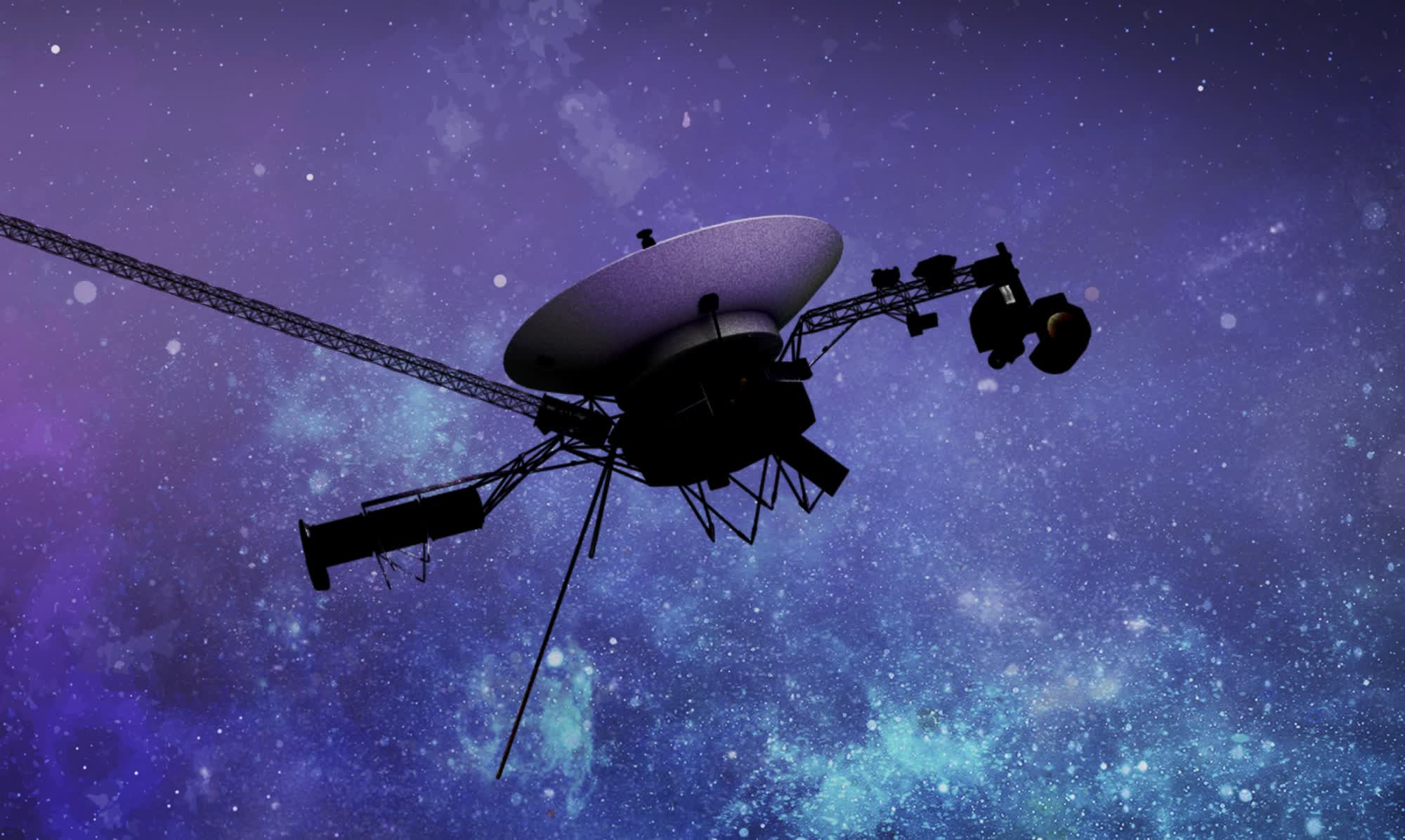
NASA has turned off one of Voyager 1’s last working science instruments, a step aimed not at ending the mission but at stretching it out as long as possible. The 46-year-old spacecraft is the most distant human-made object in history and the first to sample interstellar space directly.
The move highlights both the fragility and the longevity of a mission that began as a five-year tour of the outer planets and evolved into a decades-long exploration of the space between the stars. Every extra year of data helps scientists better understand how our solar system interacts with the wider galaxy.
Voyager 1’s story also marks a turning point for deep-space exploration. As its nuclear power source steadily weakens, engineers are forced into difficult tradeoffs that preview the kinds of choices future long-lived missions will face far from the Sun and well beyond the reach of repair crews.
Key Facts and Quotes
On April 17, 2026, engineers at NASA’s Jet Propulsion Laboratory in California sent commands to switch off Voyager 1’s Low-energy Charged Particles experiment, or LECP. According to NASA, the instrument has been measuring ions, electrons, and cosmic rays from both our solar system and interstellar space since the early years of the mission.
The shutdown followed a routine maneuver in late February, when Voyager 1’s power levels dipped more than expected and approached a threshold that could have triggered an automatic fault-protection shutdown. Mission managers say preemptively cutting power to LECP reduces the risk of that scenario and should free enough electricity to keep other systems running for roughly another year.
Voyager 1 is powered by a radioisotope thermoelectric generator, which converts heat from decaying plutonium into electricity. That power output drops by about 4 watts each year and, after nearly five decades, has become critically low. As of this spring, the spacecraft is more than 15 billion miles from Earth, meaning each radio command takes over 23 hours to arrive.
Years ago, the Voyager science and engineering teams agreed on an order for shutting down instruments as power declined, prioritizing those considered most valuable for studying interstellar space. LECP was next on the list. “While shutting down a science instrument is not anybody’s preference, it is the best option available,” Voyager mission manager Kareem Badaruddin said in a NASA blog post.
Two instruments remain active on Voyager 1: one that listens for plasma waves and another that measures magnetic fields. Engineers are also testing a broader power-saving strategy they call the “Big Bang” on Voyager 2. If those tests in May and June 2026 go well, a similar reconfiguration on Voyager 1 could follow later in the year and might even allow LECP to be revived.
NASA officials say the goal is to keep at least one science instrument operating on each of the twin spacecraft into the 2030s. That would extend humanity’s direct measurements of interstellar space to nearly 60 years after launch, offering a long baseline for studying how conditions beyond the solar system change over time.
What It Means for You
For the public, Voyager 1’s latest update is a reminder that one of the most storied missions in space history is still working, but in its final chapters. Future data returns are expected to slow and eventually cease as instruments are powered down one by one.
In the near term, space watchers can look for NASA updates on whether the “Big Bang” power swap succeeds and how long the remaining instruments can operate. The mission’s eventual end will not affect daily life on Earth, but it will mark the end of a remarkable era of exploration that has shaped how scientists and citizens alike see our place in the galaxy.
As Voyager 1 enters what may be its final decade, what kind of long-term exploration projects do you think societies should prioritize next, in space or here on Earth?
Sources
NPR report by Willem Marx on Voyager 1, published April 19, 2026; NASA Jet Propulsion Laboratory Voyager mission blog and power management update, published April 18, 2026; NASA Voyager mission overview materials and historical timeline, accessed April 19, 2026.