TL;DR
A Texas judge will consider declaring four men actually innocent in the 1991 Austin yogurt shop murders, after new DNA evidence identified a different suspect who died in 1999.
Why This Matters
The 1991 yogurt shop killings, in which four teenage girls were murdered at a small Austin dessert shop, have haunted the city and the families involved for more than three decades. The case became a symbol of both brutal violence and deep frustration with an investigation that dragged on for years without clear answers.
On Thursday, a Texas court will consider a formal declaration of innocence for four men who were long tied to the crime, including one who spent years on death row before his conviction was overturned. A ruling of “actual innocence” would not only clear their names but also underscore how evolving forensic tools, especially DNA analysis, can upend long-standing assumptions in high-profile cases.
The hearing highlights broader questions about wrongful convictions, police interrogation practices, and how cold cases are revisited when new science and renewed public attention come into play. It also opens a path for potential financial compensation for years spent behind bars, while families of both the victims and the accused continue to seek a measure of closure.
Key Facts & Quotes
A state district judge in Travis County is set to consider whether to formally declare four men actually innocent in connection with the 1991 killings at an “I Can’t Believe It’s Yogurt” shop in Austin. The original defendants are Michael Scott, Forrest Welborn, Robert Springsteen, and Maurice Pierce.
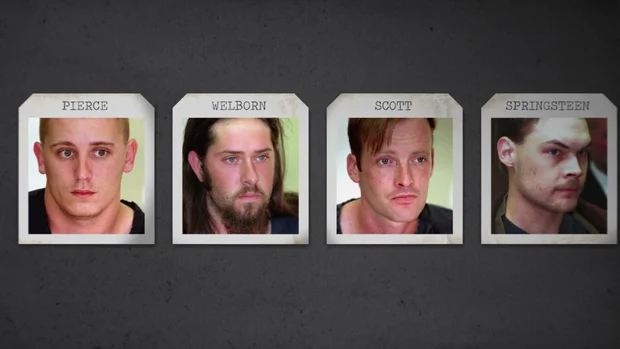
Springsteen was once convicted and sent to death row, and Scott was also convicted; both said their confessions were coerced. Their convictions were overturned in the mid-2000s. Welborn was charged but never tried after two grand juries refused to indict him. Pierce spent about three years in jail before charges were dismissed; he died in 2010.
Travis County District Attorney Jose Garza has said the four men have “been waiting for the criminal justice system to clear their names” for more than 25 years, according to remarks released when the hearing was scheduled. A declaration of actual innocence would be a crucial legal step toward compensation for the time they spent jailed or imprisoned.
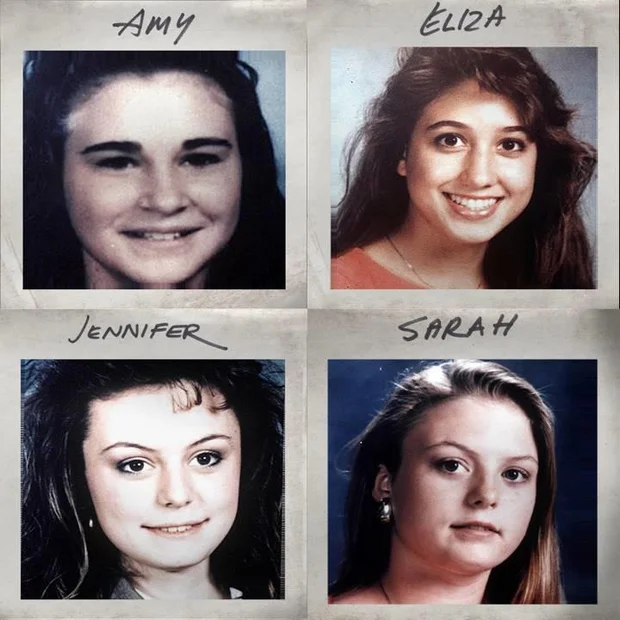
The victims – Amy Ayers, 13; Eliza Thomas, 17; and sisters Jennifer and Sarah Harbison, 17 and 15 – were bound, gagged and shot in the head. One of the girls was sexually assaulted, and the shop was set on fire, destroying much of the physical evidence. The first lead investigator later recalled that smoke and soot covered nearly every surface, making fingerprint work “kind of difficult.”
Investigators pursued thousands of leads and some false confessions before arresting the four men in 1999. In 2009, after new DNA testing unavailable in 1991, revealed another male suspect, a judge ordered the charges against Springsteen and Scott dismissed instead of allowing a new trial.
The case went largely cold until 2025, when renewed public attention and additional review of old and new evidence led investigators to identify Robert Eugene Brashers, a serial killer and rapist linked by DNA to several crimes in the 1990s, as the likely perpetrator. Brashers died by suicide during a standoff with police in Missouri in 1999.
Authorities say a DNA sample collected from beneath Amy Ayers’ fingernail matched Brashers, as did DNA from a 1990 murder in South Carolina. They also note that Brashers was arrested near El Paso two days after the Austin killings, driving a stolen car that contained a pistol of the same caliber used in one of the yogurt shop shootings.
According to investigators’ public statements, details of the Austin crime – victims tied with their own clothing, sexual assault, and crime scenes set on fire – mirror patterns seen in Brashers’ other known offenses. Austin defense attorney Sam Bassett has said that formal declarations of innocence are rare, describing them as granted in only “a very small percentage” of cases involving overturned convictions.
What It Means for You
For many readers, this latest update is a reminder that long-settled cases can change when new science and fresh reviews are applied. DNA technology, which has advanced rapidly since the early 1990s, is reshaping how police and courts handle cold cases, sometimes confirming old verdicts and sometimes dismantling them.
If the judge declares the four men actually innocent, it could influence how Texas and other states approach compensation for wrongful convictions and the use of older interrogation practices that relied heavily on confessions. It may also encourage more systematic re-examination of serious crimes from the pre-DNA era.
For families who have lived for decades with unanswered questions – whether as relatives of victims or of the accused – the outcome could affect how they view the justice system’s ability to correct its own mistakes.
As this and other high-profile wrongful conviction cases unfold, how much weight do you think courts should give to modern forensic evidence when it conflicts with earlier confessions and testimony?
Sources: Primary information is drawn from public statements by the Travis County District Attorney’s Office and summaries of investigators’ briefings and case materials made public in 2025 and 2026.