Why This Matters
The theft of three paintings by Auguste Renoir, Paul Cézanne, and Henri Matisse from a private museum near Parma, Italy, is the latest sign that Europe’s cultural institutions remain targets for highly organized criminal groups. Police say the works are worth millions of euros.
When recognized masterpieces vanish, the loss is not only financial. These paintings are part of a shared cultural heritage that draws visitors, supports local economies, and helps define national identity. Recovering such works can take years, and some disappear from public view for generations.
The heist also comes amid a visible uptick in high-profile museum crimes across Europe, including a major jewel theft at the Louvre in Paris last October and earlier burglaries in Germany and the Netherlands. Each new case raises questions about how secure even well-funded institutions really are.
For Italy, which holds one of the world’s largest concentrations of art treasures, the incident adds pressure on authorities and private foundations to show they can protect collections that often sit far from major urban centers and rely on lean security budgets.
Key Facts and Quotes
Police in northern Italy said Monday that thieves broke into the Magnani Rocca Foundation, a private museum about 12 miles from Parma, during the night of March 22-23. According to police accounts reported by the Associated Press, the intruders forced open the entrance door to gain access.
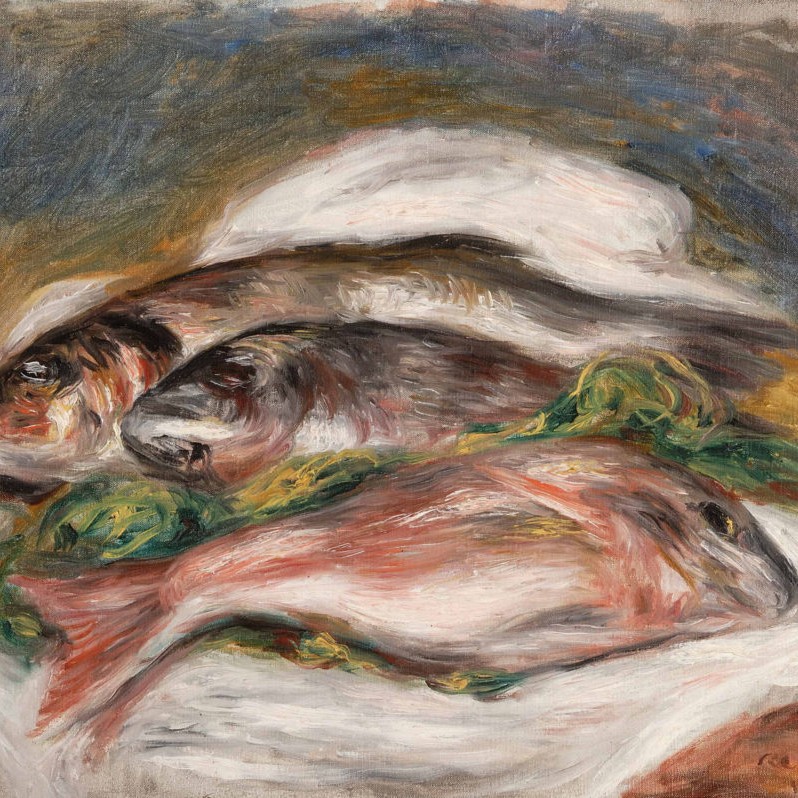
The stolen works were identified as “Fish” by Auguste Renoir, “Still Life with Cherries” by Paul Cezanne, and “Odalisque on the Terrace” by Henri Matisse. Authorities said the three paintings together are valued in the millions of euros, though a precise figure was not released.
ITALY ART HEIST: Thieves made off with three paintings by Renoir, Cezanne, and Matisse worth millions of euros from a museum near the city of Parma in northern Italy, police said on Monday. MORE: https://t.co/P4W1X6XUj7 pic.twitter.com/iuqc8HJTb0
— NEWSMAX (@NEWSMAX) March 30, 2026
Local media reports cited by the Associated Press say the thieves removed the canvases in less than three minutes and fled across the museum gardens, suggesting the operation was carefully planned. The museum reportedly believes “a structured and organized gang” carried out the robbery and that the alarm was interrupted, but did not stop the theft.
The Magnani Rocca Foundation, established in 1977, houses the collection of art historian Luigi Magnani and includes works by Albrecht Dürer, Peter Paul Rubens, Anthonyisco Goya, van Dyck, Franc and Claude Monet. The museum did not publish a public statement on its website and could not be reached for comment, as it is closed on Mondays.
The Parma heist follows a series of headline-making museum crimes, including an October incident in which thieves stole jewels and other items worth an estimated 88 million euros from the Louvre in Paris, according to earlier official and media reports. Investigators there have described a broad, well-organized network targeting high-value cultural assets.
What It Means for You
For travelers and museum-goers, this latest theft may mean tighter security checks, more cameras, and possible changes in how small and mid-sized institutions allow visitors to move through galleries. Some works may be temporarily removed from display while museums review their protections.
More broadly, the case highlights how dependent public access to art is on behind-the-scenes security work and international police cooperation. Visitors, donors, and local communities may increasingly be asked to support investments in alarms, staffing, and insurance so that important works can remain on public view instead of being locked away.
As museums respond to rising art thefts, how do you think they should balance open public access with the need for stronger security?
Sources
- Associated Press report published by PBS NewsHour, March 30, 2026.
- Background information on the Magnani Rocca Foundation from its publicly available materials.
- Prior reporting on the October Louvre jewel heist and related European museum thefts from official statements and news coverage in 2025.