Why This Matters
President Donald Trump has signed an executive order directing the federal government to ease research restrictions on certain psychedelics, including ibogaine, for possible use in treating serious mental health conditions. Supporters say the move targets post-traumatic stress disorder, addiction, and other treatment-resistant illnesses that contribute to high suicide and overdose rates.
The order marks a notable shift in the federal approach to psychedelics, which remain tightly controlled under drug laws even as interest grows in their medical potential. While some cities and states have begun rethinking psychedelic policy, these substances are still classified as among the most restricted drugs at the national level.
For veterans, first responders, and people who have not improved with standard therapies, the decision raises hopes for faster access to new options. At the same time, ibogaine in particular carries serious health risks, and researchers stress that large, carefully designed clinical trials are needed before any psychedelic can be considered safe or effective for broad use.
Key Facts and Quotes
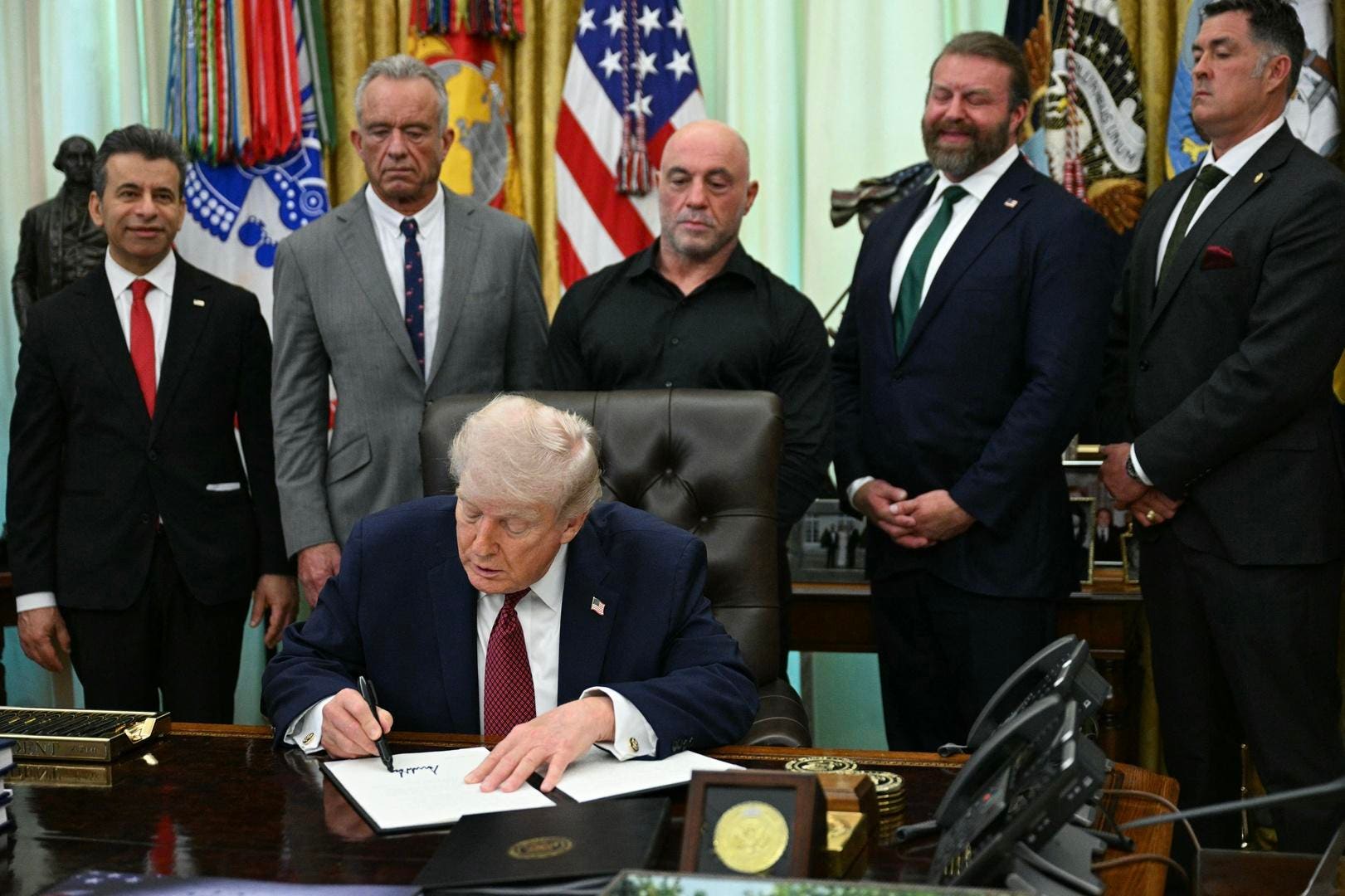
According to CBS News, Trump signed the order Saturday in the Oval Office, joined by Health and Human Services Secretary Robert F. Kennedy Jr. and podcaster Joe Rogan. Trump said the order will “dramatically accelerate access to new medical research and treatments based on psychedelic drugs,” which he described as having “life-changing potential.” He emphasized veteran suicide rates, saying, “It’s for a lot of people, but it’s for our veterans in particular.”
The president announced a $50 million federal investment in psychedelic research and said the government would open a pathway for ibogaine to be given to “desperately ill patients” under the Food and Drug Administration’s Right to Try rule. FDA Commissioner Marty Makary said three psychedelics will be added to the agency’s National Priority Voucher pilot program, which is designed to speed review of products tied to key national health priorities. He said the FDA will also begin the process of allowing human trials of ibogaine in the United States, calling the situation “an unmet public health need” with “potentially promising treatments.”
Ibogaine is a naturally occurring compound found in a shrub native to Africa and has been used in some countries to treat depression, anxiety, addiction, PTSD, and brain injury, CBS News reported. Researchers say it may eventually help fill a gap in addiction care, especially for opioid dependence, but most existing data come from small observational or open-label studies. Former Surgeon General Jerome Adams said early work on ibogaine and other psychedelics has shown “potential for rapid improvements in symptoms and functioning in treatment-resistant cases” of mental illness.
Adams stressed that the order keeps full FDA and Drug Enforcement Administration oversight in place and does not legalize or reclassify psychedelics. Ibogaine remains a Schedule I substance, grouped with drugs such as heroin and ecstasy, according to DEA scheduling information. Because it is illegal in the United States, some Americans have traveled to unregulated clinics abroad, often in Mexico or the Caribbean. Studies show ibogaine can trigger dangerous heart rhythm problems that can be fatal. A 2023 review of 24 studies including 705 people, cited by CBS News, called the risk of death from cardiac issues “worrying” and found at least 27 deaths linked to ibogaine.
What It Means for You
For patients and families, the executive order does not mean immediate, wide access to ibogaine or other psychedelics. Instead, it is likely to speed the launch and review of formal clinical trials under FDA rules, which could take years to produce clear answers on safety and effectiveness. The Right to Try pathway may open limited options for people with severe, life-threatening conditions who have exhausted approved treatments, but only under strict medical and regulatory supervision.
For the broader public, the order could shape how quickly psychedelic therapies move from fringe clinics into mainstream medicine, if they ultimately prove beneficial. Key questions ahead include how federal agencies implement the order, how Congress responds to funding and oversight, and whether state-level research efforts expand. The results of upcoming trials will be central to determining whether ibogaine and similar drugs ever become approved treatments in the U.S.
How do you think the U.S. should balance faster access to experimental mental health treatments with the need to fully understand their risks?
Sources
CBS News report by Kerry Breen, published April 19, 2026; Statements from President Donald Trump, Health and Human Services Secretary Robert F. Kennedy Jr., Food and Drug Administration Commissioner Marty Makary, and former Surgeon General Jerome Adams as reported by CBS News; Background on ibogaine’s legal status from U.S. Drug Enforcement Administration drug scheduling information; Summary of ibogaine safety data from a 2023 review of 24 studies cited by CBS News.