Why This Matters
A sharp rise in gray whale deaths in and around San Francisco Bay has turned one of the West Coast’s busiest waterways into an emergency research site. Scientists are trying to understand why more whales are entering the bay undernourished, and why so many are not making it back out.
Gray whales are a key coastal species and an early warning system for the health of the North Pacific. They complete one of the longest migrations of any mammal, traveling up to 20,000km each year between breeding grounds off Mexico and feeding areas in the Arctic.
When a species that depends on predictable food and migration routes begins to change its behavior, it can signal deeper problems in ocean conditions. Researchers say what is happening in San Francisco Bay may reflect larger shifts driven by climate change, altered prey availability, and growing pressure from shipping.
Key Facts and Quotes
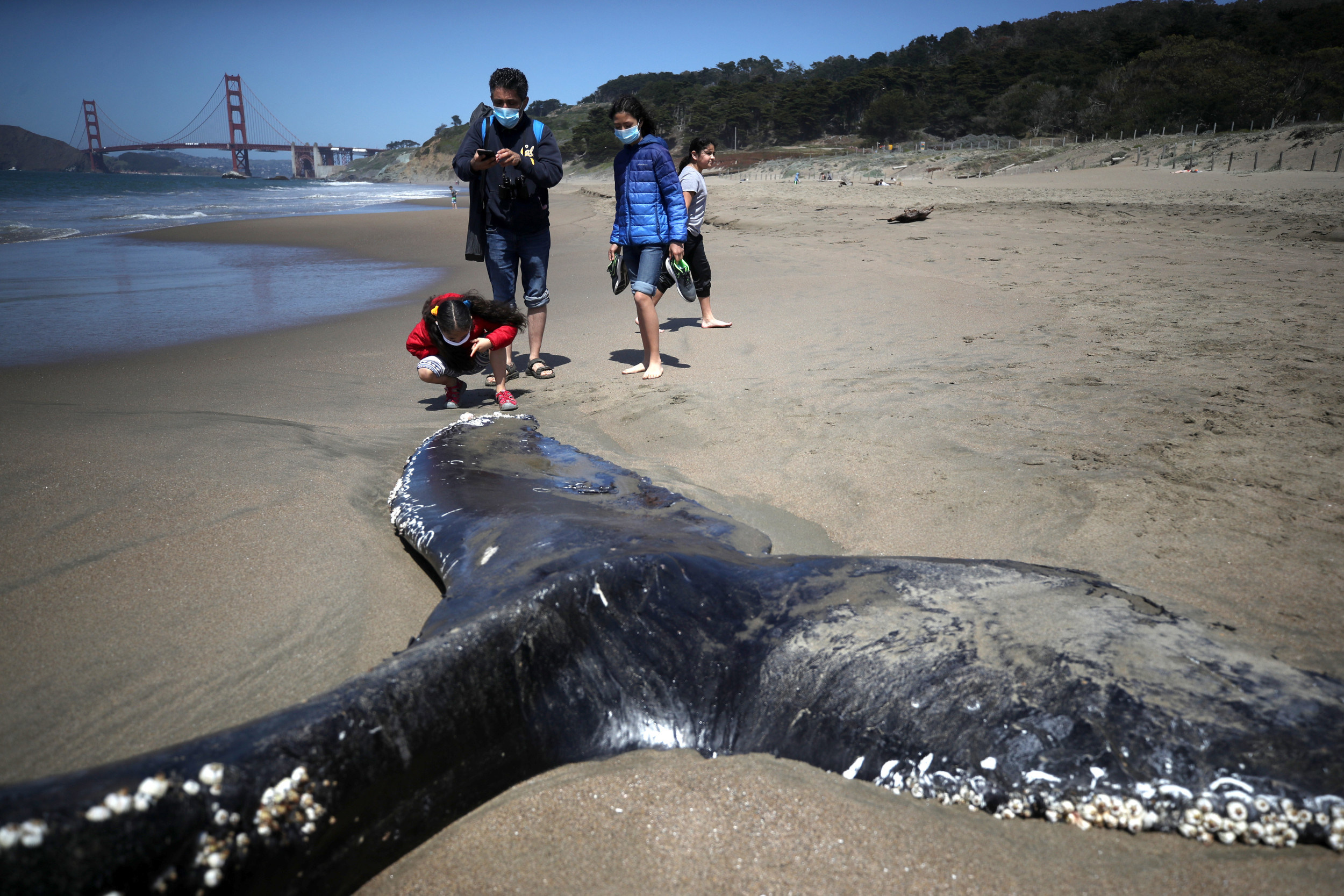
In 2025, 21 dead gray whales were found in the broader San Francisco Bay region, the highest annual count on record there, according to new research. So far this year, scientists have documented seven more deaths. Before 2018, these whales were not known to stop in the bay regularly during their migration.
The bay, a 4,140-square-kilometer estuary, appears to have become a new seasonal habitat for some gray whales. Graduate researcher Josephine Slaathaug, who led a recent mortality study, said the whales seem to be changing course after years of steep declines in their main prey in the Arctic. “It’s a new habitat that they’ve chosen to utilize,” she explained.
Slaathaug’s team examined hundreds of photographs of living whales and carcasses found in the bay since 2018. The study described “a very concerning high rate of death in San Francisco Bay,” estimating that nearly one-fifth of the gray whales entering the bay have died there. Many arrivals appear thin or undernourished.
Researchers say the whales may be driven into the bay by hunger because they “don’t have the energy reserves necessary to complete the entire migration back to the Arctic.” Once there, however, they face new risks from heavy ship traffic, including large commercial vessels, ferries, and recreational boats. Necropsies, or animal autopsies, frequently reveal trauma consistent with vessel strikes.
Dead or dying gray whales have also been reported off the coasts of Washington and Oregon, raising questions about broader changes along the migration route. Marine responders involved in examining carcasses say each loss is painful but also scientifically important. “It’s sad to see a dead whale,” said researcher Kathi George. “But there’s also a lot that we can learn.”
What It Means for You
For people who live, work, or sail along the West Coast, the latest findings could lead to new rules and advisories. Officials may consider measures such as seasonal speed limits for ships, routing changes in key whale areas, or updated guidance for whale-watching and recreational boating in and around San Francisco Bay.
More broadly, scientists say the gray whale deaths are a visible signal of how warming oceans and shifting food webs can ripple into coastal communities, ports, and fisheries. They urge the public to follow local wildlife advisories, report stranded or distressed animals to authorized hotlines, and stay tuned for new data on gray whale populations in the years ahead.
As scientists weigh new protections, how do you think coastal regions should balance busy shipping lanes with safeguarding large marine animals like gray whales?
Sources
Recent peer-reviewed study by Josephine Slaathaug in Frontiers in Marine Science, 2026; Public updates and background from NOAA Fisheries on Eastern North Pacific gray whales, 2019-2023; Statements and field reports from The Marine Mammal Center in California, 2018-2026; News reporting and on-the-ground interviews published April 2026.