Why This Matters
On the night the Chernobyl nuclear plant exploded in April 1986, a young couple in the nearby Soviet city of Pripyat went ahead with their wedding, unaware that a catastrophic accident was unfolding. Forty years later, they are sharing how a single day reshaped the rest of their lives.
The Chernobyl disaster, widely described as the world’s worst civilian nuclear accident, forced the rapid evacuation of tens of thousands of people and left a long-lasting radioactive exclusion zone. Personal accounts like theirs turn a vast historical event into something concrete, showing how ordinary routines and celebrations vanished overnight.
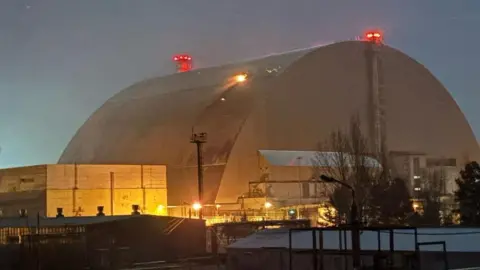
Today, the ruined reactor sits in a region again touched by war, after Russia’s full-scale invasion of Ukraine pushed fighting through parts of northern Ukraine in 2022. Stories from survivors who have now been displaced twice – first by radiation, then by conflict – highlight the human cost of both technological failure and armed aggression.
Key Facts and Quotes
Shortly after midnight on 26 April 1986, 19-year-old trainee teacher Iryna Stetsenko had just finished doing her nails for her wedding when she opened the balcony door and heard a deep noise in the distance. It felt, she later recalled, as if many planes were flying overhead and the glass in the windows shook.
Her fiancé, 25-year-old power plant engineer Serhiy Lobanov, was asleep on a mattress in a nearby apartment crowded with guests. He said he “felt a shake, as if some kind of wave passed,” briefly wondered whether it was a mild earthquake, and went back to sleep. Neither realized that reactor four at the Chernobyl nuclear power plant, less than about 2.5 miles away, had exploded.
By around 6 am, Serhiy woke to a bright, sunny wedding day and began his errands, taking bed linen to a friend’s apartment where the couple planned to spend their first night and buying flowers. At Iryna’s family home, the telephone kept ringing. Neighbors called to say “something terrible” had happened, but officials ordered that life carry on as normal, and children were sent to school, according to historical accounts.
Later, the bride, groom, and guests drove in a small convoy to Pripyat’s Palace of Culture, a community building used for ceremonies and concerts. They stood on an embroidered cloth bearing their names to make their vows, then moved to a nearby cafe for a reception. “Everyone understood that something had happened, but no one knew the details,” Serhiy recalled, saying the banquet felt more somber than festive. Their carefully rehearsed waltz quickly fell apart; “We just hugged each other and moved in the hug,” Iryna said.

In the early hours of Sunday morning, a friend banged on the door of the apartment where the newlyweds were staying, urging them to catch an evacuation train scheduled for 5 am. With only a light dress packed for the second day of celebrations, Iryna pulled on her wedding dress again and rushed back to her mother’s apartment to change. Her shoes had caused painful blisters, so she ran barefoot through puddles. From the train, they saw the glow of the destroyed reactor. It was “as if you were looking into the eye of a volcano,” Serhiy said. Officials described the evacuation as “temporary,” but, in his words, “We left for three days, but ended up going for our entire lives.” Decades later, the couple resettled in Berlin, fleeing conflict in Ukraine.
What It Means for You
For readers far from Ukraine, the story underscores how quickly normal life can be overturned by disasters, whether caused by technology, human error, or war. A wedding, one of the most carefully planned days in many people’s lives, became the starting point of this couple’s permanent exile.
Their experience also continues to inform today’s debates about nuclear energy, disaster preparedness, and the war in Ukraine. The Chernobyl exclusion zone, once a symbol of Cold War-era risk, briefly became a frontline route in 2022. Firsthand memories from people like Iryna and Serhiy keep attention on safety standards, transparent communication in crises, and the long shadow such events can cast over families and communities.
How do personal stories like this one shape your understanding of large, often abstract events such as nuclear accidents or wars?
Sources
BBC feature by Jordan Dunbar on a Chernobyl wedding and evacuation, published April 18, 2026; International Atomic Energy Agency historical overview of the 1986 Chernobyl accident, updated 2023; World Health Organization summaries on Chernobyl health impacts, updated 2021; Historical statements from Soviet and later Ukrainian authorities on the Pripyat evacuation and Chernobyl exclusion zone.