TL;DR
A NASA WB-57 high-altitude research jet made a dramatic belly landing at Ellington Airport near Houston after a mechanical problem with its landing gear. Both crew members escaped safely, and NASA says it is investigating the cause.
Why This Matters
The incident highlights both the risks and resilience of specialized research aircraft that support U.S. science and national programs. The NASA WB-57 fleet, originally based on a Cold War-era bomber design, has been flying scientific missions since the 1970s, collecting data on the atmosphere, climate, and space-related phenomena.
Because these aircraft often operate at very high altitudes and carry sensitive instruments, their safety and reliability are closely watched by aerospace experts. A serious landing-gear failure that leads to a gear-up, or “belly,” landing is rare, and each case becomes a key learning opportunity for engineers and pilots.
The landing took place at Ellington Airport, southeast of Houston, which hosts NASA flight operations near a major metropolitan area and key energy infrastructure. Any aviation incident there draws public attention, even when there are no injuries. As investigators review what went wrong, their findings may influence how NASA maintains and upgrades its aging but still valuable research fleet.
Key Facts & Quotes
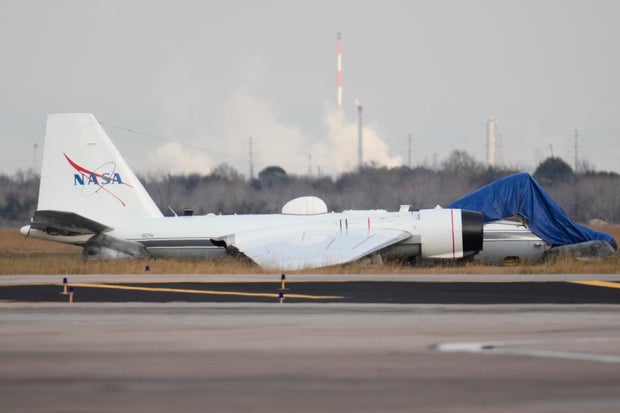
On Tuesday, Jan. 27, 2026, a NASA WB-57 research aircraft experienced a mechanical problem and landed without using its landing gear at Ellington Airport in Texas. Video shared on social media shows the jet descending slowly, then striking the runway on its underside, with bursts of yellow flame and white smoke trailing behind as it slid to a stop.
NASA WB-57 aircraft: A research plane made a gear-up landing at Ellington Field around 11:30 a.m., closing a runway as crews responded and all onboard exited safely.
Here’s what makes this aircraft different: https://t.co/sA5VvjGlpX#Houston #NASA pic.twitter.com/syhDm7koFL
— Chron (@chron) January 27, 2026
NASA said in a post on X that the crew members were “all safe at this time” and that the plane had suffered a “mechanical issue” that will be investigated. The agency did not immediately provide further details on the nature of the problem or the extent of the damage.
Footage from the scene shows the aircraft resting on the runway with its nose blackened, emergency vehicles positioned nearby, and responders assisting as the pilot climbs out of the cockpit. The WB-57 typically carries two people – a pilot and a sensor equipment operator – and is designed to fly for about 612 hours at altitudes above 63,000 feet.
According to NASA’s public information on the WB-57 program, the aircraft have supported atmospheric, climate, and spaceflight-related research since the 1970s and remain “an asset for the scientific community.”
Sources: NASA statement on X, Jan. 27, 2026; eyewitness video and images shared publicly the same day.
What It Means for You
For most travelers, this incident is a reminder of how much emergency training and engineering work happens behind the scenes in aviation. The WB-57 is a specialized research jet, not a commercial airline aircraft, and the landing occurred at a field used primarily for government and general aviation, not at Houston’s main passenger airports.
Still, any successful outcome from a serious in-flight malfunction reinforces why safety procedures, pilot training, and regular maintenance are central to air travel. In the coming weeks, NASA is expected to release more information about what caused the landing-gear problem and whether any changes will be made to the WB-57 fleet or its operations.
As investigations move forward, one open question is how agencies should balance extending the life of older but unique research aircraft with the cost and complexity of upgrades or replacements. What do you think is the right balance between using proven older technology and investing in newer, potentially safer systems?