Why This Matters
South Carolina’s recent measles outbreak, with about 1,000 reported cases, is the worst the United States has seen in more than 35 years, according to the Associated Press. The people at highest risk are babies who are still too young to receive the measles, mumps, and rubella (MMR) vaccine, leaving many families anxious about everyday activities like grocery shopping or child care.
Measles is one of the most contagious viruses known. It can cause pneumonia, brain swelling, and, in rare cases, death. Infants are especially vulnerable because their immune systems are still developing and they cannot receive the routine first MMR dose until around 12 to 15 months old, except in special situations such as outbreaks.
Public health experts say these youngest children depend on “herd immunity,” meaning at least about 95% of people in a community need to be vaccinated to prevent sustained spread. As vaccination rates fall in certain areas, that protective barrier weakens, putting infants and people with fragile health in harm’s way. The U.S. is now close to losing its international status as a country that has eliminated measles, AP reports.
Key Facts and Quotes
In South Carolina’s Spartanburg County, the epicenter of the outbreak, less than 90% of students are up to date on required vaccines, far below the level needed to reliably block transmission. State officials say 253 of the 997 measles cases identified so far were in children age 4 or younger, but they have not released more detailed age or hospitalization data for infants, citing confidentiality and reporting gaps.
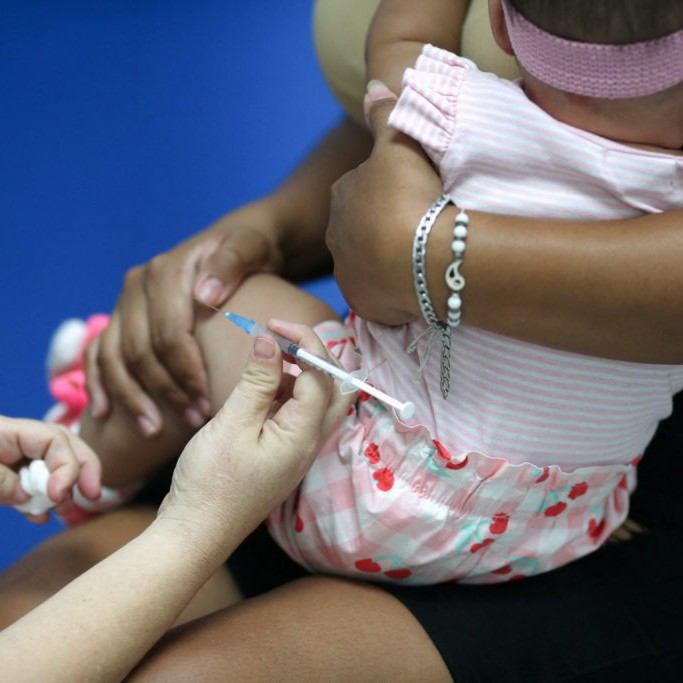
“Babies become sitting ducks,” said Dr. Deborah Greenhouse, a pediatrician in Columbia, describing how infants must rely on others’ vaccinations to stay safe. Some pediatric practices in the state, including that of Dr. Jessica Early in Greer, responded by offering an approved infant MMR dose as early as 6 months and giving the usual second dose earlier than the standard age of 4 to 6 years during the outbreak.
The uncertainty has rippled through families and businesses. A regional director for a child care network in the outbreak zone told AP that 18 families withdrew their children despite no confirmed cases in the centers, forcing at least one teacher to be laid off. “A lot of parents were really stressed out,” he said, describing how routine sniffles suddenly raised fears of measles.
At the policy level, the outbreak is colliding with a broader political fight over vaccines. The Associated Press reports that Health Secretary Robert F. Kennedy Jr., a longtime critic of vaccine policies, has pushed to overhaul federal guidance amid cuts to public health budgets. In South Carolina, lawmakers are considering a bill that would bar vaccine requirements for children under age 2, including in day care. Its sponsor, Republican state Sen. Carlisle Kennedy, said he wants to protect parents’ rights after navigating complex medical issues with his own infant. Greenhouse called the measure “terrifying,” arguing that rolling back requirements undermines herd immunity for the most fragile children.
Nationwide, doctors worry the trend is moving in the wrong direction. The U.S. recorded 1,671 measles cases in the first three months of 2026 alone, representing 73% of all cases from 2025, AP reports. National MMR coverage among kindergartners has slipped from 95.2% in 2019-20 to 92.5% in 2024-25, and some communities are much lower; one Spartanburg County school reported only 21% of students fully vaccinated. “To see that we are actually going backward is just confounding,” Greenhouse said.
What It Means for You
For parents of infants and young children, doctors say the most important step is to talk with a trusted pediatrician. In many outbreaks, health authorities allow or recommend giving an early MMR dose to babies between 6 and 11 months and may accelerate the timing of the second dose. Clinicians can also advise on how to reduce exposure risks in crowded indoor spaces, clinics, or day care settings when local measles activity is high.
For everyone else, the story underlines how individual vaccination decisions can affect neighbors’ babies, cancer patients, and others who cannot be fully protected on their own. Experts suggest staying informed about your state’s vaccine laws and school or day care requirements, checking that your own immunizations are current, and following guidance from local health departments, pediatricians, the Centers for Disease Control and Prevention, and other established medical organizations as measles outbreaks and policy debates continue.
How do you think communities and policymakers should balance parental choice with the need to protect infants and medically vulnerable people from diseases like measles?
Sources
Associated Press reporting via PBS NewsHour, “Babies too young for MMR vaccine become ‘sitting ducks’ in measles outbreaks,” April 11, 2026; U.S. Centers for Disease Control and Prevention guidance on measles and MMR vaccination, accessed 2024; World Health Organization materials on measles elimination and surveillance, accessed 2024.