TL;DR
Mattel has introduced its first Barbie with autism, created with an advocacy group to better reflect how some autistic people experience the world and expand inclusive play options for families.
Why This Matters
For many families, toys are more than entertainment; they are tools children use to make sense of themselves and others. By adding a Barbie with autism to its long-running Fashionistas line, Mattel is trying to reflect a growing push for toys that mirror a wider range of abilities, body types and backgrounds.
Autism affects millions of children and adults worldwide, and diagnoses have risen as awareness and screening improve. According to data cited by U.S. health officials, about 1 in 31 8-year-olds in the United States has an autism diagnosis, with higher reported rates among boys and among Black, Hispanic, Asian and Pacific Islander children. Yet many parents and self-advocates say media and products still tend to present a narrow image of autism, often focused on white boys.
The new Barbie is part of a broader shift in the toy industry, where major brands are trying to balance commercial appeal with cultural expectations around representation. For readers, this story sits at the intersection of business, health, parenting and social inclusion, raising questions about how companies portray disability and who gets to shape those images.
Key Facts & Quotes
Mattel Inc. said it is rolling out a Barbie with autism as the latest addition to the Barbie Fashionistas line, which already includes dolls with Down syndrome, hearing aids, a prosthetic leg, vitiligo and Type 1 diabetes, as well as a variety of body shapes, skin tones and hair types. The company said in a news release that the autistic Barbie was developed over more than 18 months in partnership with the Autistic Self Advocacy Network (ASAN), a nonprofit led by autistic people.
Mattel launches the first-ever Autistic Barbie doll, developed in partnership with the@autselfadvocacy. https://t.co/nXnK9j8UvR #Mattel #Barbie pic.twitter.com/JR1cgl75pg
— Toy Shop UK (@toyshopuk) January 12, 2026
The goal, Mattel said, was to show some common ways autism can express itself, while acknowledging that there is no single “look” to autism. “Like many disabilities, ‘autism doesn’t look any one way,'” said Noor Pervez, ASAN’s community engagement manager, who worked closely on the design. “But we can try and show some of the ways that autism expresses itself,” Pervez told CBS News.
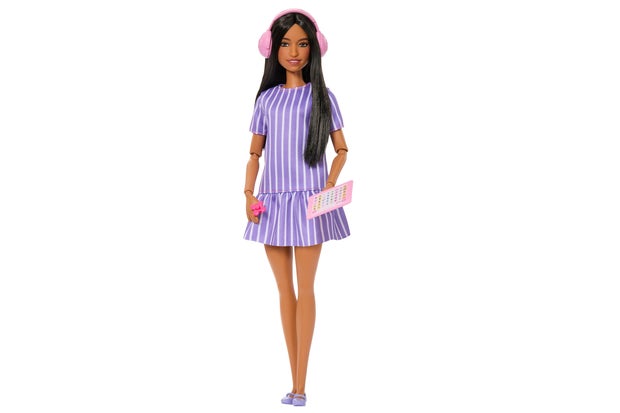
The doll’s eyes are turned slightly to the side, representing how some autistic people may avoid direct eye contact. Articulated elbows and wrists are meant to allow for poses that reflect “stimming” or repetitive movements, such as hand flapping, that many autistic people use to manage sensory input or express excitement.
Designers debated clothing textures and fit, Pervez said. Some autistic people prefer loose clothes because of sensory sensitivities to seams, while others favor snug clothing that helps them feel where their bodies are in space. The final doll wears an A-line dress with short sleeves and a flowy skirt to limit fabric-to-skin contact, along with flat shoes for stability.
Each Barbie comes with several accessories: a pink finger-clip fidget spinner, noise-canceling headphones, and a pink tablet modeled on communication devices used by some people who have difficulty speaking. The face was inspired in part by Mattel employees in India and mood boards featuring a range of Indian women, an effort to highlight autistic people from underrepresented communities.
“Barbie has always strived to reflect the world kids see and the possibilities they imagine, and we’re proud to introduce our first autistic Barbie as part of that ongoing work,” Jamie Cygielman, Mattel’s global head of dolls, said in a statement cited by CBS News. The doll is launching at Mattel’s online shop and at Target stores at a suggested price of $11.87, with Walmart expected to stock it starting in March, according to the company.
What It Means for You
For parents, grandparents and caregivers, the new Barbie offers another option when looking for toys that reflect a child’s life or help explain differences in a simple, age-appropriate way. Families raising autistic children may see this as a chance for kids to play with a doll that shares some of their traits or tools, like headphones and a communication tablet.
Even for households without a direct connection to autism, dolls like this can be a starting point for conversations about disability, inclusion and how people experience the world in different ways. Schools, therapists and community programs may also incorporate such toys into play-based learning or social skills work.
Looking ahead, what to watch is whether this Barbie becomes a lasting part of the line, how autistic self-advocates respond over time, and whether other companies deepen their own efforts to include disability and neurodiversity in their products. As more toys reflect a broader range of lives, a central question remains: who gets to define respectful representation, and how closely do companies listen to the communities they portray?
Sources
- Mattel Inc. news release and product materials on Barbie Fashionistas autistic doll, January 2026.
- CBS News report, “Mattel introduces Barbie with autism,” published January 13, 2026.
- U.S. Centers for Disease Control and Prevention (CDC), Autism and Developmental Disabilities Monitoring Network prevalence estimates, 2023 data reported in 2024.
How do you think toys that represent different disabilities and neurotypes can most constructively shape how children understand inclusion and difference?