Why This Matters
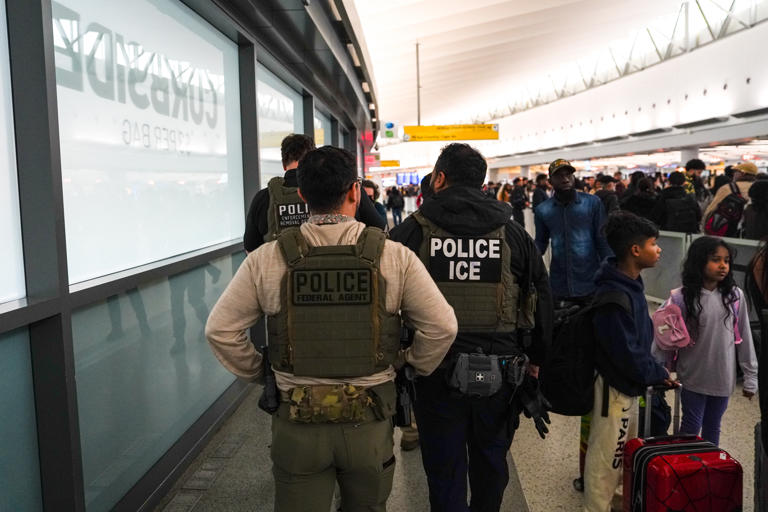
The Trump administration has deployed hundreds of Immigration and Customs Enforcement agents to more than a dozen major U.S. airports, including New York, Chicago, Houston, and Atlanta, to help an understaffed Transportation Security Administration during the ongoing federal shutdown. The move comes as thousands of TSA officers work without pay and more are calling out, leading to long security lines and flight delays.
The deployment is a rare overlap between immigration enforcement and aviation security. Former acting ICE Director John Sandweg, who served under President Obama, told PBS NewsHour that using ICE in this way has little precedent and raises operational and civil liberties questions, especially if immigration checks are folded into TSA screening.
TSA, created after the September 11 attacks, is responsible for passenger and baggage screening at U.S. airports. During shutdowns, TSA officers are considered essential and must report to work without pay, a strain that has historically led to higher absenteeism and slower checkpoint processing.
Key Facts and Quotes
According to PBS NewsHour correspondent Stephanie Sy, about 12 percent of TSA officers called out the previous day, roughly 3,200 employees, worsening existing staffing shortages. Sandweg said the ICE agents now at airports face strict limits on what they can do because they are not trained TSA screeners and do not hold the same clearances.
“The jobs of these TSA agents are actually very highly skilled,” Sandweg said, noting that ICE agents cannot operate X-ray machines, perform pat-downs, or conduct behind-the-scenes baggage inspections. Instead, he said, they appear to be providing a visible presence and helping with perimeter or exit-lane security. “From an operational perspective, it’s really hard to see a lot of value with this,” he added, predicting the move is “really not going to be operationally all that impactful” in shrinking lines.
ICE agents deployed to major US airports.
The agents will not conduct passenger screening but are expected to handle support roles, allowing TSA officers to focus on security checks as passengers deal with long delayshttps://t.co/WhUPWcQJAM pic.twitter.com/3IeUgRHIkB
— AFP News Agency (@AFP) March 24, 2026
Sandweg said immigration agents have “never” been used this way at major airports. He described one narrow exception: some Border Patrol agents occasionally staff small airports near the U.S.-Mexico border or in places like Puerto Rico to watch for people who crossed the border unlawfully and are trying to fly into the U.S. interior. Otherwise, he said, ICE’s traditional airport role has been limited to criminal investigations and targeted arrests linked to customs areas and smuggling cases, not TSA checkpoints.
President Trump has publicly said the ICE agents will “do security, including the immediate arrest of illegal immigrants.” Sandweg warned that if immigration enforcement operations are tied to TSA checkpoints, “you will see a lot of chaos,” including legally present noncitizens and U.S. citizens being pulled aside for questioning when identification raises suspicion.
He suggested TSA lanes could become de facto identification checkpoints, with travelers presenting foreign passports or non-Real ID-compliant licenses referred to ICE for more screening. That, he said, could fuel fear and prompt some people to avoid flying. As of the interview, Sandweg said it did not yet appear that ICE had begun broad immigration enforcement at checkpoints. PBS NewsHour noted it requested interviews with White House border adviser Tom Homan, Transportation Secretary Sean Duffy, and acting ICE Director Todd Lyons; the invitations remained open.
What It Means for You
For travelers, the immediate impact is likely to be longer waits rather than shorter ones. ICE agents may be visible at more airports, but according to Sandweg, they are limited to basic security tasks, so TSA officers still bear nearly all responsibility for passenger and baggage screening during a period of heightened absenteeism.
In the long term, the deployment could shape how Americans experience both airport security and immigration enforcement. Lawmakers, courts, and advocacy groups may scrutinize whether the government clearly separates safety screening from immigration checks, and travelers may watch closely to see if the shutdown is resolved, TSA staffing stabilizes, and reports emerge of immigration-related questioning at checkpoints.
How do you think airport security should balance efficient screening with concerns about immigration enforcement and civil liberties?
Sources
- PBS NewsHour segment and interview, “ICE agents deploy to major U.S. airports as TSA faces shutdown shortages,” aired March 23, 2026.