TL;DR
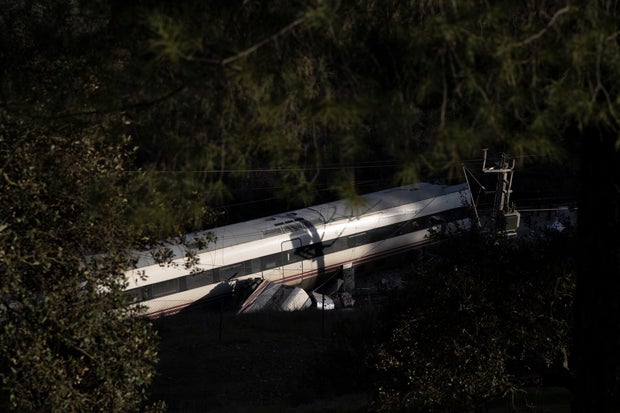
Spain has declared three days of national mourning after two high-speed trains collided near Adamuz, killing 41 people and injuring more than 120, as investigators search for the cause of the country’s deadliest rail disaster in over a decade.
Why This Matters
Spain operates one of the largest high-speed rail networks in Europe, carrying millions of passengers each year across a country that relies heavily on trains for business travel and tourism. A mass-casualty crash on this network raises urgent questions about safety systems, maintenance practices and oversight on routes that are seen as a fast, climate-friendly alternative to flying or driving.
The collision near Adamuz in the Andalusia region is Spain’s deadliest rail disaster in more than ten years, recalling memories of the 2013 derailment near Santiago de Compostela that killed dozens. The new crash will likely prompt fresh reviews of signaling, track conditions and train equipment, not just in Spain but in other countries investing in high-speed rail.
For families of the dead and injured, the focus now is on recovery and identification. For authorities, it is on understanding how a train could derail on a recently renovated, straight, flat section of track and then collide with an oncoming service. The answers will shape future rail policy, public confidence and, potentially, international safety standards.
Key Facts & Quotes
The crash happened late on Sunday near Adamuz, in southern Spain’s Andalusia region. A high-speed train operated by Iryo, traveling from Malaga to Madrid, derailed and crossed onto the opposite track, where it struck an oncoming train, causing both to derail.
Authorities said the death toll rose to 41 after another body was recovered from an Iryo carriage on Monday evening. More than 120 people were injured, and 39 remained hospitalized on Tuesday, including four children, according to the regional government of Andalusia.
Spain’s transport minister, Oscar Puente, said investigators are concentrating on coach six of the Iryo train, which was the first to leave the tracks. He called the crash “extremely strange” because it occurred on a flat, straight segment of track that had been renovated in May, adding that “all the railway experts are extremely surprised” and that “there are many pieces of the puzzle we must fit together.”
Spain’s chief high-speed train engineer, Alvaro Aznar, told reporters that the “earliest signs point to mechanical failure” as a possible cause, though the investigation is still in its early stages and no official conclusion has been reached.
Flags are flying at half-mast on public buildings across Spain. Lawmakers in the neighboring region of Extremadura held a minute of silence, and cabinet ministers scaled back public appearances. Heavy machinery has been deployed to lift the most damaged carriages so rescuers can search for additional victims and recover remains.
Juan Manuel Moreno, head of the Andalusian regional government, cautioned that it could take 24 to 48 hours “to know with certainty how many deaths have resulted from this terrible accident.” King Felipe VI and Queen Letizia were scheduled to visit Adamuz on Tuesday to meet rescuers and local officials.
What It Means for You
For people in Spain and for international travelers, this disaster may temporarily affect confidence in high-speed rail, even though such crashes remain rare. In the short term, passengers can expect potential delays, rerouted services and increased inspections on key corridors as rail operators and regulators check tracks and equipment.
In the longer term, the findings of the investigation could lead to new safety rules, technology upgrades or changes in maintenance schedules. Similar reviews have followed major rail accidents in other countries and often result in improved protections, from better braking systems to stricter monitoring of infrastructure.
For readers outside Spain, the crash is a reminder that as governments expand high-speed rail to cut emissions and ease road congestion, strong safety oversight remains essential. The official inquiry’s conclusions will be closely watched by engineers, policymakers and rail users well beyond Spain’s borders.
Sources
- Statements by Spanish Transport Minister Oscar Puente in a nationally broadcast radio interview on Jan. 20, 2026.
- Official updates from the regional government of Andalusia and the regional Assembly of Extremadura on Jan. 19-20, 2026.
What safeguards or changes would you like to see when countries expand or upgrade high-speed rail networks?