TL;DR
Storms with tornado alerts hit parts of the Southeast while the Northeast finally warms from a deep freeze, and California braces for heavy rain, wind, and mountain snow.
Why This Matters
This latest weather pattern stretches from the Gulf Coast to New England and the Pacific, underscoring how fast conditions can change across the United States. Severe thunderstorms and tornado watches in the Southeast threaten homes, roads, and power lines, while the rapid warm-up in the Northeast follows weeks of unusually harsh cold.
On the West Coast, a strong Pacific storm is forecast to bring heavy rain, powerful winds, and deep mountain snow to California. That combination raises concerns about flash flooding, treacherous travel over mountain passes, and mud or debris flows in areas scarred by recent wildfires.
For many households, especially older adults and families caring for both children and aging parents, these swings matter in practical ways: travel plans, heating and power costs, and the safety of relatives in different regions. Officials are urging people to pay close attention to local forecasts and be ready for everything from downed trees and short-term outages to hazardous driving and evacuation warnings.
Key Facts & Quotes
A weekend storm system sweeping across the Southeast brought tornado warnings to parts of Mississippi and Louisiana before moving into southern Georgia and the Florida Panhandle, according to the National Weather Service. Survey teams reported some of the worst damage near Lake Charles, Louisiana, where high winds overturned a horse trailer and a Mardi Gras float, damaged an airport jet bridge, and ripped a metal awning from a home into power lines.
Power poles were snapped or knocked down near the Louisiana communities of Jena, Cheneyville, and Donaldsonville, weather service reports said. As of early Sunday afternoon, more than 12,000 customers in northern Florida were without electricity, along with roughly 7,000 in Mississippi and 6,000 in Louisiana, according to outage-tracking site PowerOutage.us. Authorities reported no deaths or serious injuries linked to the storms as of Sunday.
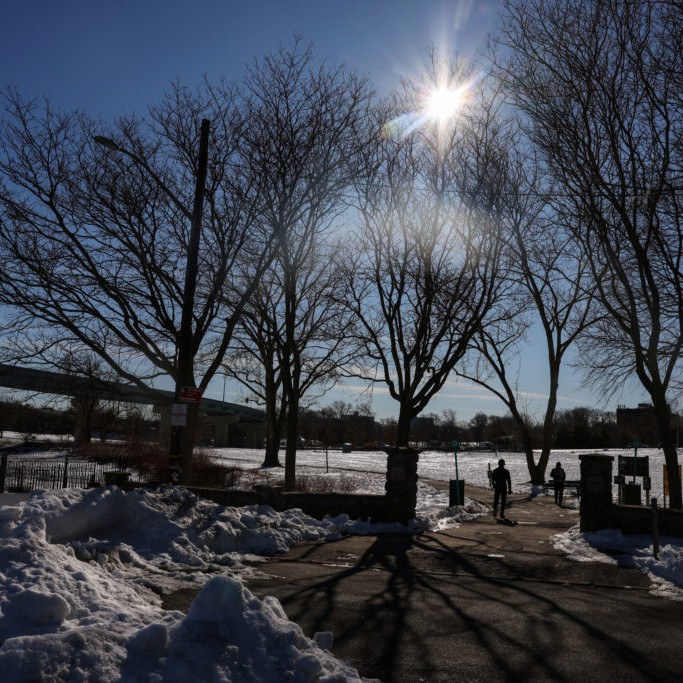
Farther north, the Northeast began to thaw after a weeks-long stretch of uncommonly cold weather. Boston had been running nearly 7 degrees Fahrenheit below its typical February average and was on pace for its coldest winter in more than a decade. Still, forecasts now call for highs in the upper 30s and low 40s, closer to seasonal norms.
On the West Coast, forecasters said a powerful winter storm is moving into California. Rain that began Sunday in the San Francisco Bay Area is expected to intensify, bringing a risk of flooding. In the Sierra Nevada, including ski areas around Lake Tahoe, totals could reach up to seven feet of snow before the system exits late Wednesday, according to weather service projections.
In Southern California, residents in some neighborhoods below burn scars from last year’s wildfires are under evacuation warnings through Tuesday because of the potential for mud and debris flows. Los Angeles Mayor Karen Bass said she has directed emergency crews and city departments to be ready to respond quickly to any problems. Jacob Spender, a National Weather Service meteorologist in Sacramento, urged preparation, saying, “So if they are traveling, packing winter safety kits. Anything to be prepared. This is a bigger system, and a major system.”
What It Means for You
For people living in or traveling through affected regions, the latest update is a reminder to build extra time into plans and keep backup options in mind. In the Southeast, brief but intense storms can knock out power, so having flashlights, charged phones, and a basic emergency kit is wise. In California, heavy snow in the Sierra Nevada may close passes or require chains, while lowland flooding can quickly disrupt commutes.
Those with family spread across different states may want to check in on older relatives or anyone with medical or mobility challenges, especially where outages or evacuation warnings are possible. Watching local alerts, signing up for community warning systems, and reviewing insurance coverage for storm and flood damage are practical steps as the country moves through an active stretch of winter weather. What kinds of preparations do you find most useful when serious storms are in the forecast?