Why This Matters
Pope Leo XIV has issued his sharpest rebuke so far of the U.S.-Israeli war in Iran, warning that a “delusion of omnipotence” and the “idolatry of self and money” are driving the conflict. His remarks come as a fragile ceasefire holds, and direct U.S.-Iran talks begin.
As the first U.S.-born pope, Leo’s words carry particular weight in Washington, where some officials have framed the war in religious terms. His criticism highlights a growing clash between political leaders who invoke faith to justify military action and a global religious figure insisting that God “doesn’t bless any war.”
The Vatican is also watching wider regional fallout, including Israel’s battles with Hezbollah in Lebanon and the vulnerability of Christian communities there. Against that backdrop, Leo’s language signals a move from cautious appeals for dialogue to a more forceful moral challenge to the logic of the war itself.
Key Facts and Quotes
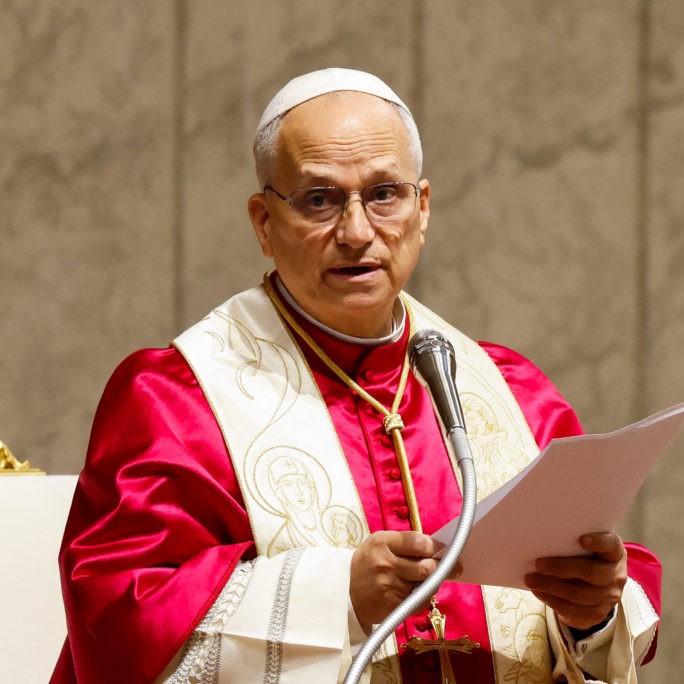
The pope spoke Saturday during an evening prayer vigil and Rosary for Peace in St. Peter’s Basilica in Rome. The service coincided with the opening of face-to-face negotiations between the United States and Iran in Pakistan and the first sustained lull in fighting under a tentative ceasefire.
Leo did not name the United States, Israel, Iran, or former President Donald Trump directly in his prepared prayer. However, he condemned what he called a culture of domination, declaring: “Enough of the idolatry of self and money! Enough of the display of power! Enough of war!”
He warned that prayer and conscience must confront “that delusion of omnipotence that surrounds us and is becoming increasingly unpredictable and aggressive,” adding that “even the holy Name of God, the God of life, is being dragged into discourses of death.” Earlier in the week, he called Trump’s threat to “annihilate Iranian civilization” “truly unacceptable” and urged dialogue instead.
U.S. officials, particularly Defense Secretary Pete Hegseth, have repeatedly invoked Christian faith to describe the United States as a Christian nation confronting its enemies. Leo has pushed back on this framing, saying God does not bless wars or those who drop bombs. At the vigil, he appealed to “all people of good will” to pray for peace and press their political leaders to end the fighting.
The gathering drew senior church and diplomatic figures, including the archbishop of Tehran, Belgian Cardinal Dominique Joseph Mathieu, and Laura Hochla, the U.S. Embassy’s deputy chief of mission, according to the embassy. Vatican officials remain especially concerned about the war’s spillover into Lebanon and the fate of Christian communities in the country’s south.
What It Means for You
For Americans, Leo’s comments sharpen an ongoing debate over how faith should intersect with foreign policy. His stance may influence how U.S. Catholics and other Christians view official claims that military campaigns can be wrapped in religious language or cast as divinely sanctioned struggles.
Looking ahead, much will depend on whether the Pakistan talks gain momentum and the ceasefire holds. Observers will be watching if U.S. and Israeli leaders temper religious rhetoric, and whether the Vatican moves beyond moral appeals toward any more active role in supporting mediation or humanitarian efforts in Iran and neighboring countries.
How do you think religious leaders should speak about modern wars and political power when their followers are divided over the conflict?
Sources
Associated Press reporting carried by PBS NewsHour, April 11, 2026; Vatican public homilies and statements by Pope Leo XIV during Holy Week and the April 11, 2026, prayer vigil in St. Peter’s Basilica.