TL;DR
A new H3N2 “subclade K” flu strain is driving an early and possibly tougher season in the UK. Health officials say existing vaccines still work and urge vulnerable people to get a jab, while healthy adults are weighing whether to pay for one.
Why This Matters
Seasonal flu is more than a bad cold. In heavy years, it strains hospitals, keeps workers home, and hits older adults and people with existing health problems hardest. When a new version of the virus spreads, as with the H3N2 “subclade K” strain now circulating in the UK, more people may be vulnerable because their immune systems have not seen it recently.
The UK’s National Health Service (NHS) has warned of an early surge and sent what the BBC described as a “flu jab SOS” to people at higher risk. That includes older adults, pregnant women, some children, and people with long-term conditions. A stronger flu season overseas can still matter to readers in the United States: today’s viruses travel quickly with international flights and holiday visits.
Health agencies in both the UK and the U.S. say annual vaccination remains the best protection against severe flu. The question many are now asking is not whether the virus is real – it is how much extra protection is worth pursuing, especially if you do not qualify for a free shot and must pay out of pocket.
Key Facts & Quotes
According to a detailed report from BBC Health, laboratory tests show an early rise in positive flu swabs in the UK, with nearly 20% of samples testing positive, compared with around 13% at the same point in previous bad seasons such as 2022 and 2024. The increase is largely linked to a mutated strain of influenza A(H3N2), known as the “subclade K” variant.
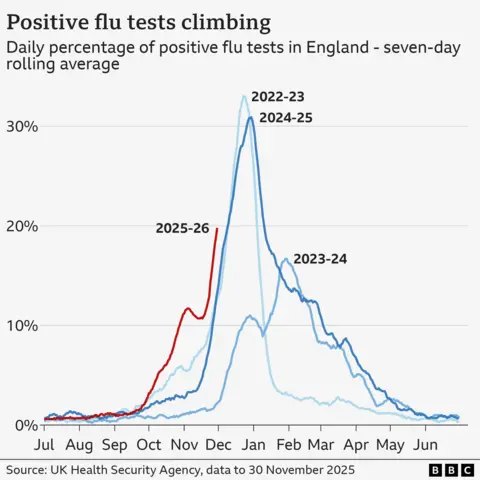
This version has not circulated widely in recent years, which means less built-up immunity in the population. The BBC report notes that “vaccines still work against the drifted influenza A(H3N2) strain that some are calling ‘super flu’,” although protection is not perfect. The vaccine formula is updated each year to match the strains experts expect to dominate.
The NHS offers a free flu shot to people at higher risk of serious illness, including older adults, many people with chronic health conditions, some carers, pregnant women and young children, as well as frontline health and social care workers who can be vaccinated through their employers, according to NHS guidance. A nasal spray version is offered to children aged 2 to 3 and to school-age children, helping to reduce spread as children often pass infections on to others.
Others can buy a vaccine from high-street pharmacies for about 20, the BBC reports. The shot typically takes up to 14 days to provide full protection. During that window, people can still catch flu, which sometimes leads to the mistaken belief that “the vaccine gave me flu.” Public health agencies stress that inactivated or nasal spray vaccines do not cause flu; they train the immune system so that, if infection occurs, it is usually milder and shorter.
Basic precautions still matter. Opening windows when meeting indoors, washing hands often with soap and warm water, covering coughs with a bent elbow or tissue, cleaning frequently touched surfaces, and wearing a mask if you must go out while ill can all help cut transmission, according to NHS and U.S. Centers for Disease Control and Prevention (CDC) advice.
What It Means for You
For adults in the 35-70 age group, especially those with heart disease, diabetes, lung conditions or weakened immune systems, this latest update is a reminder that flu can be serious even in a normal year. A “drifted” H3N2 strain with less existing immunity can push more people into clinics and hospitals.
Health agencies say vaccination is still the best single step to reduce the risk of severe illness, time off work, and complications. If you are unsure whether to get a flu shot, or whether to pay for one privately, doctors generally recommend weighing your age, health conditions, and whether you live with or care for someone vulnerable. Good hygiene, ventilation, and staying home when sick remain important layers of protection, regardless of where you live.
Sources: BBC Health report on H3N2 “subclade K” and flu season, 9 December 2025; UK National Health Service seasonal flu vaccination guidance, accessed December 2025; U.S. Centers for Disease Control and Prevention (CDC) seasonal influenza recommendations, latest available guidance.
What guides your decision on whether to get a flu shot each year, especially when reports of new strains emerge?