TL;DR
Two crew members died, and dozens were hurt after an Air Canada regional jet struck a fire truck at LaGuardia, briefly shutting the busy airport.
Why This Matters
A deadly collision on an active runway at one of New York City’s main airports is rare and deeply unsettling. LaGuardia is a major hub for business and leisure travel in the Northeast, so any serious incident there has ripple effects well beyond the region. The crash highlights how much modern air travel depends on split-second coordination between pilots, ground vehicles, and air traffic controllers in crowded airspace.
The event also comes during a partial federal government shutdown that is already straining the aviation system, with long security lines and staffing challenges. Investigators have stressed that it is too early to know whether broader staffing or system pressures played any role. Still, the crash is likely to intensify scrutiny of runway safety, controller workloads, and the layers of safeguards meant to prevent such collisions, especially as passenger volumes rise during busy travel seasons.
Key Facts & Quotes
According to official accounts, the crash happened around 11:45 p.m. Sunday, when an Air Canada regional jet landing at LaGuardia from Montreal struck an airport fire truck crossing the runway. The truck was heading to a separate plane after reports of a concerning odor on board. Tower audio reviewed in the aftermath indicates the vehicle was first cleared to cross, then urgently told to stop as the controller tried to avert a collision and diverted other incoming aircraft.
The jet, operated by Jazz Aviation on behalf of Air Canada, carried about 70 passengers and four crew members. The pilot and copilot, both based in Canada, were killed. Their names have not yet been released. Roughly 40 passengers and crew were taken to local hospitals, some with serious injuries, though most had been released by Monday morning. Two Port Authority employees in the fire truck were also injured, but their injuries were not believed to be life-threatening, officials said.
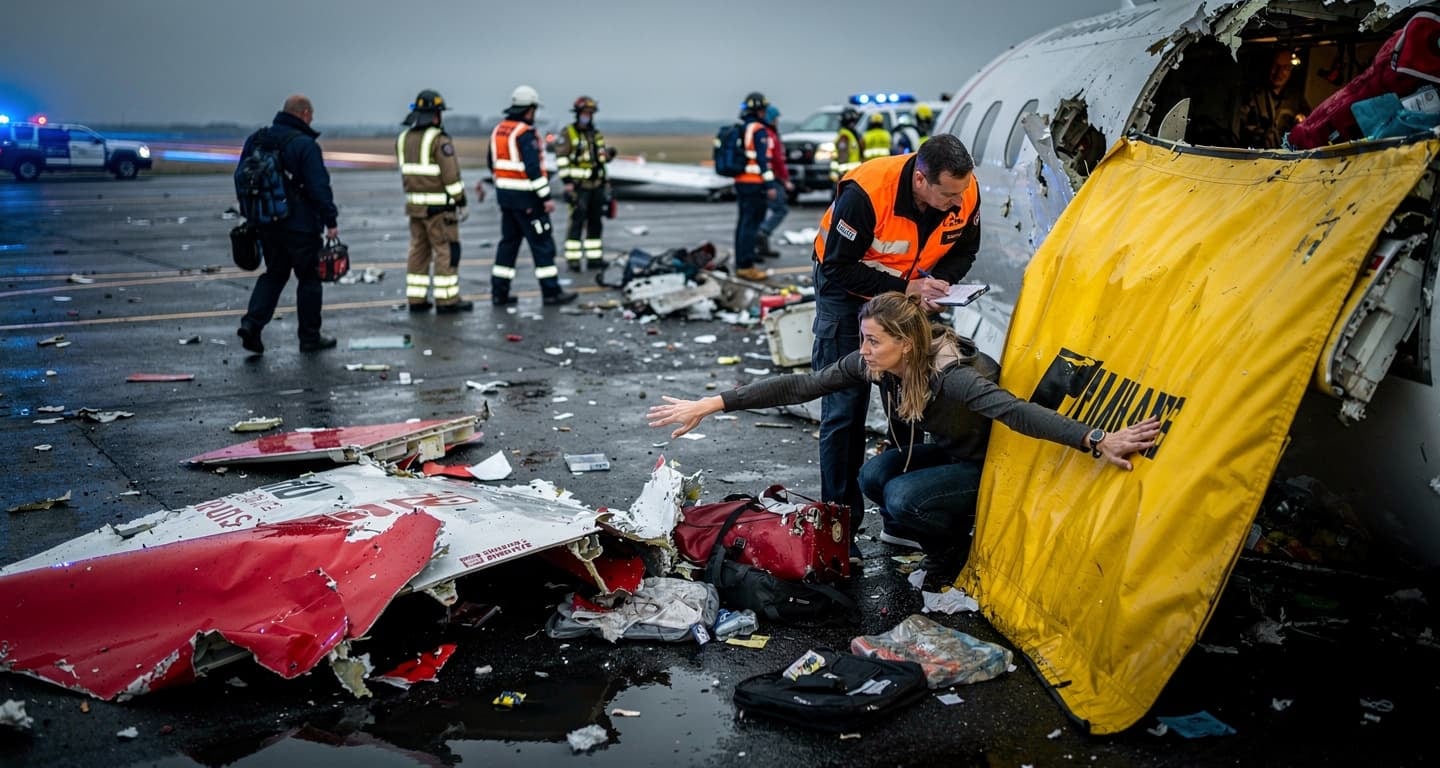
Images from the scene show the aircraft’s nose crushed and tilted upward, debris hanging from the ruined cockpit, and the fire vehicle on its side. LaGuardia was shut down after the crash, with flights diverted while federal safety investigators examined the site, before reopening Monday afternoon. The airport is the 19th-busiest in the United States. The report notes that “it’s too early to say what factors contributed to the deadly mishap,” and no official cause has been identified.
IN MINUTES: @SecDuffy and @FAA_Bryan hold press conference at LaGuardia Airport after the crash involving Air Canada Express 8646 & a Port Authority fire truck
WATCH: https://t.co/txWjQkvRXL pic.twitter.com/fJdZMYWtAI
— U.S. Department of Transportation (@USDOT) March 23, 2026
What It Means for You
For travelers, the latest update means short-term disruption and longer-term questions. Anyone flying through LaGuardia can expect some lingering delays as airlines reposition planes and crews and work through backlogs from the temporary shutdown. If you have upcoming flights, it is wise to monitor your airline’s alerts closely, allow extra time at the airport, and be prepared for possible gate or schedule changes.
Looking ahead, the investigation’s findings could shape how airports manage runway crossings and emergency responses. Depending on what is uncovered, regulators may recommend new training, technology, or procedures to reduce the chance of similar collisions. The incident also feeds into a broader debate over staffing levels and stress on aviation workers during high-demand periods and government funding standoffs. Many passengers will be watching to see whether the final report leads to visible safety upgrades or changes that happen mostly behind the scenes.
What safety changes, if any, would make you feel more confident about flying through busy airports like LaGuardia?
Sources
- Based on an on-the-record report from a U.S. public broadcaster and wire service copy dated March 23, 2026, plus an accredited news agency photo and caption from March 23, 2026.