TL;DR
A new peer-reviewed study in Science Advances estimates that long-term exposure to fine particles from wildfire smoke contributed to about 24,100 deaths per year in the contiguous United States between 2006 and 2020.
Why This Matters
Wildfires are no longer just a seasonal news story; they are becoming a long-term public health issue. The latest update from researchers writing in the journal Science Advances links chronic exposure to wildfire smoke to tens of thousands of deaths annually across the lower 48 states. That shifts the conversation from visible flames and evacuations to an invisible hazard: small particles carried hundreds or even thousands of miles from the fire line.
Fine particulate pollution, known as PM2.5, is already recognized by the U.S. Environmental Protection Agency as one of the most harmful forms of air pollution for the heart and lungs. The World Health Organization likewise warns that long-term exposure to PM2.5 increases the risk of stroke, heart disease, lung cancer, and other serious illnesses. When wildfires grow larger and more frequent in a warming climate, they add to existing air pollution from traffic, power plants, and industry.
For communities far from the traditional fire belt, this study underscores that wildfire smoke is a national issue. Health risks may be greatest for older adults and people with existing heart or lung disease, but the findings suggest that millions of Americans are being exposed to a pollutant with measurable, long-term impacts on survival.
Key Facts & Quotes
The new analysis, published Wednesday in Science Advances, examined wildfire smoke and mortality data from 2006 to 2020 across the contiguous United States. The authors estimate that chronic exposure to wildfire-related PM2.5 contributed to an average of 24,100 deaths per year during that period.
Study shows particle pollution from wildfire smoke was tied to 24,100 deaths per year in the US https://t.co/pIxpOSOIYk pic.twitter.com/5v34ZGeiGs
— Orlando Sentinel (@orlandosentinel) February 4, 2026
PM2.5 refers to particles 2.5 micrometers in diameter or smaller. According to EPA health guidance, these particles can penetrate deep into the lungs and enter the bloodstream, worsening asthma, heart disease, and other chronic conditions. The study focused specifically on these wildfire-related particles rather than all sources of PM2.5.
“Our message is: Wildfire smoke is very dangerous. It is an increasing threat to human health,” said study co-author Yaguang Wei, an assistant professor of environmental medicine at the Icahn School of Medicine at Mount Sinai, in presenting the findings.
Other researchers said the results fit with what previous work has suggested about wildfire pollution. Michael Jerrett, a professor of environmental health sciences at the University of California, Los Angeles, who was not involved in the paper, said, “The estimates they’re coming up with are reasonable. We need more of them. It’s only if we’re doing multiple studies with many different designs that we gain scientific confidence of our outcomes.”
Co-author Min Zhang, a postdoctoral researcher at the Icahn School, noted that “wildfire smoke PM2.5 has emerged as [a] significant environmental hazard in the U.S., and it’s driven by increasing frequency and intensity of wildfires due to climate change.” Jerrett added that decades of forest mismanagement and more housing in fire-prone areas have expanded the so-called “urban wildland interface,” increasing both fire risk and human exposure to smoke.
Jerrett stressed that smoke-related deaths are rarely obvious on paper: “Nobody’s going to have ‘wildfire death’ on their death certificate unless the fire actually burned them or a tree fell on them or something like that. But many of the people that are dying from this exposure are ones that are already more vulnerable. These are real lives that are being lost. This is not some arbitrary abstract statistical concept.”
The authors pointed to recent fires in Los Angeles as one example. An earlier analysis of the Palisades and Eaton fires, which burned in early 2025, estimated roughly 440 additional deaths in Los Angeles County compared with expected levels based on previous years. That work, like the new national study, used excess deaths to estimate the broader toll of smoke, not just direct fire injuries.
What It Means for You
For many Americans, especially those 35 and older or living with heart or lung conditions, this research reinforces that wildfire smoke is more than a nuisance. Even when smoke drifts in from hundreds of miles away, repeated exposure over years can add to the risk of heart attacks, strokes, and other life-shortening illnesses, according to this and earlier studies on PM2.5.
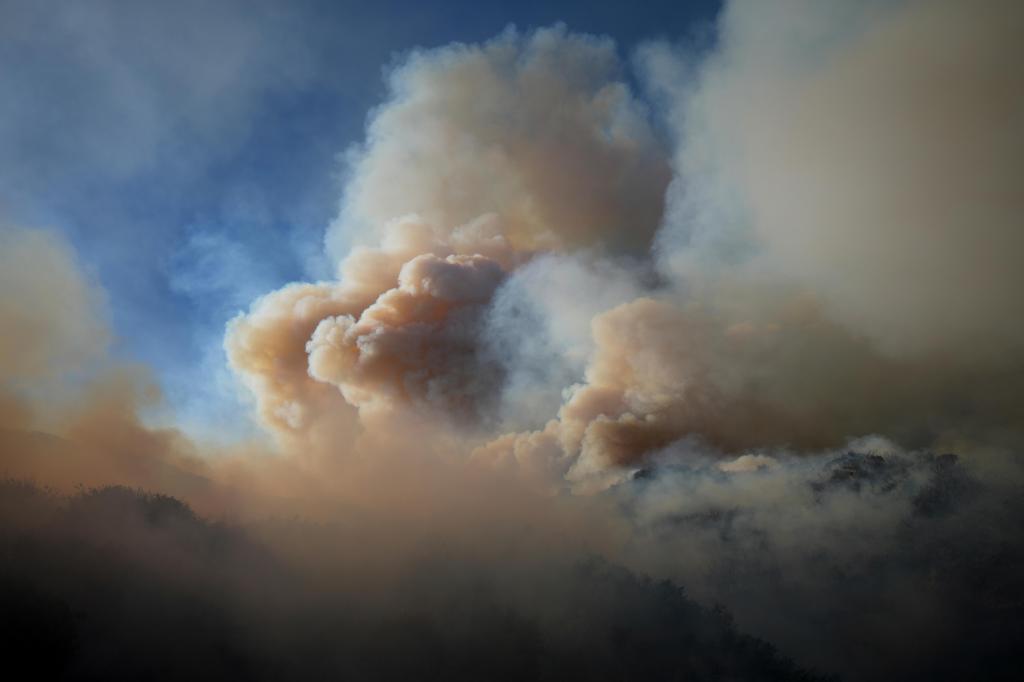
Practically, that means it is worth paying attention to local air quality alerts, especially during wildfire season or when haze is visible. Health agencies advise staying indoors with windows closed when smoke levels are high, using high-efficiency filters or air purifiers if possible, and considering well-fitted masks rated N95 or better when outdoor air is heavily polluted.
On a broader level, the findings are likely to feed into debates over forest management, building in high-risk zones, and climate policies that affect wildfire conditions. They also suggest that investments in early warning systems and community clean-air shelters could be a public health tool, not just a fire response measure. As wildfire seasons shift and lengthen, how should communities balance everyday life with this emerging, long-term health risk?