TL;DR
Southern Australia is baking under a severe heat wave near 120F, fanning bushfire risk and forcing the Australian Open to invoke extreme heat rules and delay matches.
Why This Matters
The latest update from Australia’s summer underscores how extreme weather is reshaping daily life, from small farming towns to major global sporting events. While much of the United States is dealing with bitter winter cold, southern Australia is in the grip of a dangerous heat wave, with temperatures in parts of Victoria, New South Wales and South Australia pushing toward 122F.
Such extremes strain power grids, threaten older adults and outdoor workers, and increase the risk of fast-moving bushfires. According to the World Meteorological Organization, prolonged and intense heat waves have become more frequent and severe over recent decades, contributing to higher health risks and economic losses worldwide.
Australia’s experience also highlights how climate and weather volatility can disrupt international events watched by millions, such as the Australian Open tennis tournament in Melbourne. For U.S. readers, it is a reminder that even when conditions feel normal or unusually cold at home, other regions can be facing life-threatening heat at the same time – a pattern that affects travel, global supply chains, and insurance markets.
Key Facts & Quotes
Rural towns Hopetoun and Walpeup in Victoria recorded preliminary highs of about 120F on Tuesday, according to a report from CBS News, citing local weather data. If confirmed, those readings would surpass records set during the state’s Black Saturday bushfires in 2009, when 173 people were killed.
Authorities in Victoria said no casualties from the current heat wave had been reported as of Tuesday, but warned residents to take precautions as three forest fires burned out of control. Australia’s Bureau of Meteorology has previously cautioned that hotter, drier summers increase both fire danger and heat stress, especially in inland and rural communities.
In Melbourne, the state capital, temperatures came close to the city’s all-time highs. At Melbourne Park, site of the Australian Open, organizers activated what they described as “extreme heat protocols,” closing retractable roofs over the main arenas and postponing matches on outer courts without cover.
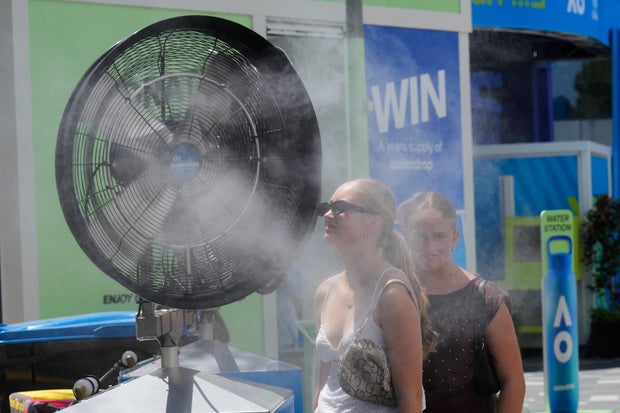
During a sweltering quarterfinal between Aryna Sabalenka and Iva Jovic, players used ice packs and portable fans during breaks. Photographers were given seat cushions to prevent burns, and fans crowded around misting stations or moved into air-conditioned areas. Daytime attendance fell from about 50,000 on Monday to 21,000 on Tuesday as people heeded health warnings and stayed home.
The heat follows another hot spell earlier in the month and comes during what officials have described as one of Australia’s hottest summers on record, with some areas again approaching 122F – levels similar to those seen in the destructive 2019 bushfire season.
What It Means for You
For many people, 35 to 70, extreme heat is not just uncomfortable; it can be dangerous, particularly for those with heart or lung conditions. Health agencies, including the World Health Organization, note that heat waves now cause more deaths in some regions than any other weather hazard, often through dehydration, heat stroke, or worsening chronic illness.
Events in Australia point to what communities worldwide may see more often: outdoor activities rescheduled or canceled, higher cooling costs, and added strain on caregivers and emergency services. If you travel to hotter regions – whether for work, sports, or vacation – it will be increasingly important to monitor local forecasts, understand heat policies at venues, and plan for shade, hydration, and rest.
Closer to home, experts say preparing for extreme heat can be as basic as checking on older neighbors, knowing where local cooling centers are, and reviewing your household’s backup plans for power outages during very hot days.
Sources
CBS News report on Australia heat wave and Australian Open disruptions, Jan. 27, 2026; World Meteorological Organization assessments on trends in extreme heat events, 2021-2023; public guidance from Australian weather and emergency agencies on heat and bushfire risk.
How do you think cities and major events should adapt as extreme heat becomes more common around the world?