TL;DR
President Donald Trump’s administration has moved to implement roughly half of the policy goals laid out in Project 2025, a conservative roadmap for reshaping the federal government, with major changes in reproductive rights, LGBTQ+ protections, education and the military, according to a joint review by PBS News and The 19th.
Why This Matters
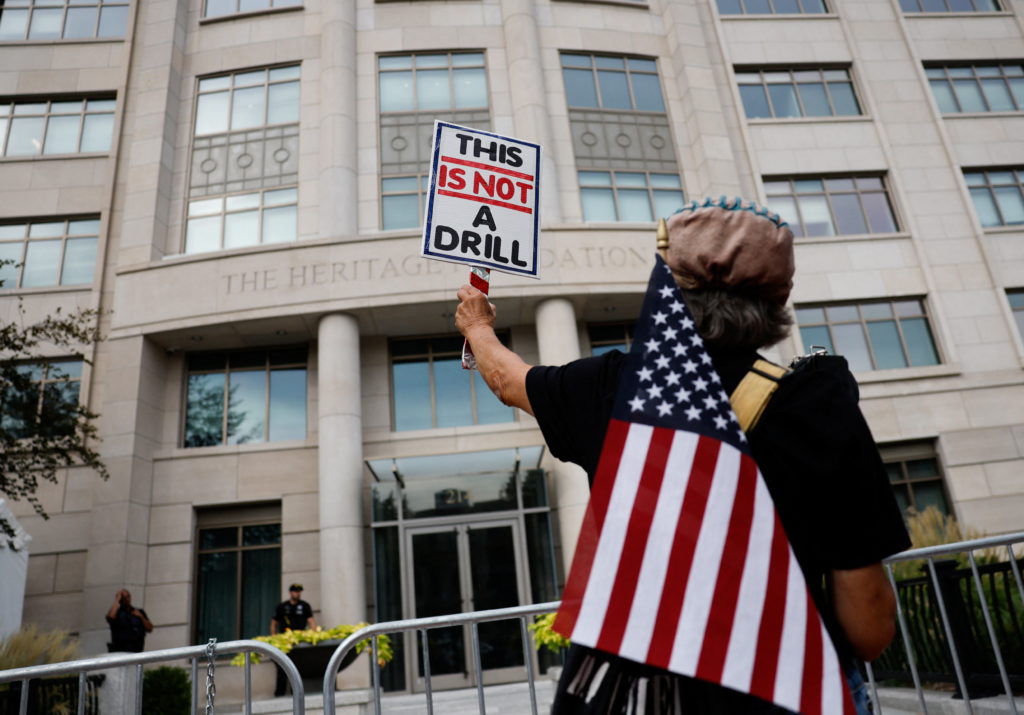
Project 2025, developed by the conservative Heritage Foundation and allied groups, is a 920-page plan that outlines how a Republican administration could remake the federal government. Supporters see it as a way to rein in what they view as liberal overreach in areas like gender, race and federal regulation. Critics, including civil rights and reproductive health advocates, describe it as a Christian-nationalist project that would sharply roll back protections for women, LGBTQ+ people and racial minorities.
The latest update, reported by PBS News and nonprofit newsroom The 19th, finds that the Trump administration has already achieved about half of the plan’s overall goals in its current term. That includes a reorientation of federal health agencies, cuts to diversity, equity and inclusion (DEI) programs, and the redistribution of key Education Department functions to other cabinet departments.
Because Project 2025 targets long-standing norms on data collection, civil rights enforcement and who can serve in the military, the changes go beyond partisan swings. They could set new baselines for federal policy that are difficult to reverse, affecting health care access, school funding and everyday paperwork from passports to student loans.
Key Facts & Quotes
According to trackers cited by PBS News and The 19th, roughly 50% of Project 2025’s goals have been put in motion. Personnel aligned with the plan now hold key posts, including Russell Vought at the Office of Management and Budget, Peter Navarro as a top trade adviser and Brendan Carr at the Federal Communications Commission.
Reproductive rights: An abortion-rights group, Reproductive Freedom for All, estimates that about 40% of Project 2025’s anti-abortion agenda has been implemented. New guidance at the Centers for Disease Control and Prevention (CDC) states the agency “will promote the dignity of human life at all stages of development, improve maternal health care, and strengthen the family.” The CDC has also delayed its long-running annual abortion report, while the administration has rescinded Biden-era protections for emergency abortion care and dissolved a federal task force on reproductive access.
Congress barred Planned Parenthood from receiving Medicaid funds as part of Trump’s tax law, a move the organization says could shut up to 200 clinics and affect about 1.1 million patients. Health and Human Services Secretary Robert F. Kennedy Jr. has begun reviewing changes that expanded access to the abortion pill mifepristone.
LGBTQ+ rights: Following a White House order to remove references to “gender ideology,” federal health agencies initially purged many LGBTQ+ references from public websites before a federal judge ordered restoration. The administration has cut more than $800 million in National Institutes of Health grants tied to LGBTQ+ health research, restricted trans Americans’ access to accurate passports and reversed military protections for transgender service members.
The White House has urged agencies to roll back Biden-era interpretations of Title IX that expanded protections related to sexual orientation and gender identity. Project 2025 equates “transgender ideology” with pornography and calls for outlawing it; while the administration has not adopted that specific language, it has taken steps that reduce trans people’s visibility and legal recognition.
Education and school choice: The administration has announced plans to transfer major Education Department functions to other agencies, a move critics say could harm students with disabilities, low-income families and student loan borrowers. Trump also signed an order asking federal officials to monitor K-12 curriculum for what it calls “indoctrination” based on gender and equity concepts. A broad Republican bill, the One Big Beautiful Bill Act, created a national voucher program for private school scholarships.
Military policy: Under Defense Secretary Pete Hegseth, the Pentagon has halted new gender-affirming hormone treatments and surgeries for transgender troops and now lists gender dysphoria as a disqualifying condition for service. A Biden-era policy that covered travel and leave for service members seeking abortions across state lines has been rescinded. An executive order abolished all DEI offices in the Defense Department, and a new task force promotes “merit-based, color-blind policies” for promotions.
What It Means for You
For many Americans, the impact of these changes will be felt not only in high-profile debates, but in routine interactions with schools, doctors, insurers and federal agencies. Patients in areas served by Planned Parenthood clinics may see fewer options for low-cost health care. Families considering adoption or foster care could face different rules depending on their state and sexual orientation. Military families may be affected by changes to health benefits and travel support for reproductive care.
Shifts in federal education oversight and the expansion of school vouchers could reshape local school budgets and choices for parents. Restrictions on data collection about race, gender and sexuality may alter how inequality is measured and addressed. As more elements of Project 2025 are implemented or challenged in court, Americans will likely see continued legal battles over how far a presidential administration can go in redefining the role and reach of the federal government.
How do you think long-term federal policy changes like these should balance individual rights, religious freedom and local control?