Why This Matters
A Saturday morning attack at one of New York City’s busiest transit hubs left three people wounded and the suspect dead after police opened fire, highlighting how quickly violence can erupt in crowded public spaces.
The incident at the 42nd Street-Grand Central subway station comes amid ongoing concern about safety on mass transit, a system that millions of people rely on daily for work, school, and medical care. High-profile crimes, even when rare, can influence public confidence and ridership.
Grand Central is a central transfer point for both subway and commuter rail lines. An emergency there during the morning rush can disrupt travel across much of the city, strain police and medical resources, and prompt renewed debate over how to keep platforms and trains secure.
Key Facts and Quotes
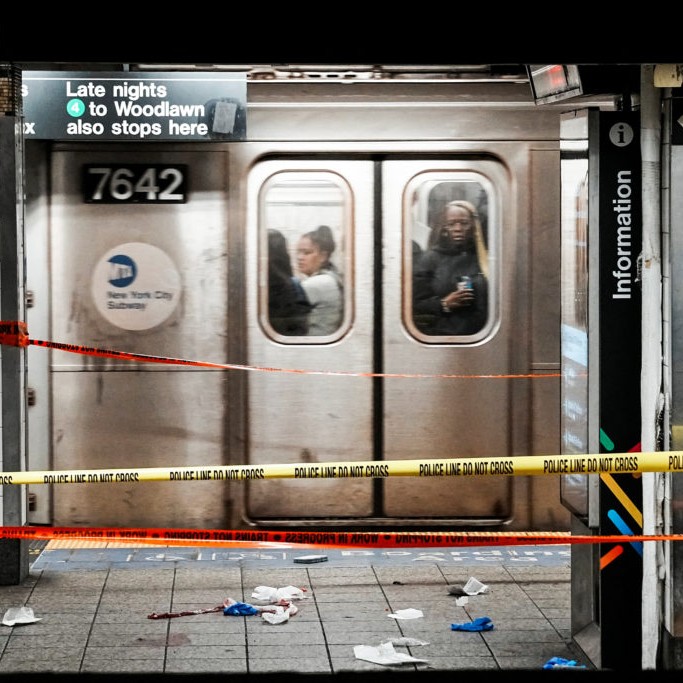
According to police, officers responded around 9:40 a.m. to reports of an assault inside the 42nd Street-Grand Central subway complex in Midtown Manhattan. They encountered a man armed with a machete who, officials said, had already attacked riders on the platform and was behaving erratically, claiming he was “Lucifer.”
Police Commissioner Jessica Tisch said at a news conference that officers ordered the man to drop the weapon about 20 times. When he advanced toward officers with the blade extended, an officer shot him twice, she said. The suspect, identified by police as 44-year-old Anthony Griffin, was taken to Bellevue Hospital, where he was pronounced dead.
Tisch said three people were stabbed: an 84-year-old man, a 65-year-old man, and a 70-year-old woman. Their injuries, including significant cuts to the head and face, an open skull fracture, and a shoulder wound, were not believed to be life-threatening, according to authorities. Chief of Transit Joseph Gulotta said the attacks appeared to be random and that one victim was slashed on a platform before the suspect moved upstairs and attacked two more people.
“Our officers were confronted with an armed individual who had already injured multiple people and was continuing to pose a threat,” Tisch said, praising what she described as decisive action to protect riders. Gov. Kathy Hochul wrote that she was “grateful to our brave officers who acted quickly to stop the suspect.” Witness Beau Lardner described hearing bangs “loud enough to hear through headphones” and seeing a “wall of people” rushing for the exits, adding he had “never seen a crowd move like that.”
The New York Police Department urged people on the social platform X to avoid the Grand Central area for several hours while the investigation unfolded, and the Metropolitan Transportation Authority said trains temporarily bypassed the station before service resumed later in the day.
What It Means for You
New Yorkers and visitors can expect visible police responses, including service disruptions and a heavy police presence, when serious incidents occur at major stations. Officials regularly urge riders to follow real-time advisories, listen for announcements, and leave stations quickly when directed.
Events like this often intensify discussion about how cities should handle transit safety, mental health crises, and weapons enforcement in crowded public areas. Riders may see renewed calls for more officers, additional cameras, and outreach services, as leaders weigh how to deter violence without making the system feel less open and accessible.
In light of incidents like this, how do you think large cities should balance open access to public transit with stronger safety and security measures for riders and workers?
Sources
Associated Press report by Julie Walker published via PBS NewsHour, April 11, 2026; NYPD news conference remarks by Police Commissioner Jessica Tisch and Chief of Transit Joseph Gulotta, April 11, 2026; public social media statements by Gov. Kathy Hochul, April 11, 2026; Metropolitan Transportation Authority service alerts and public updates, April 11, 2026.