TL;DR
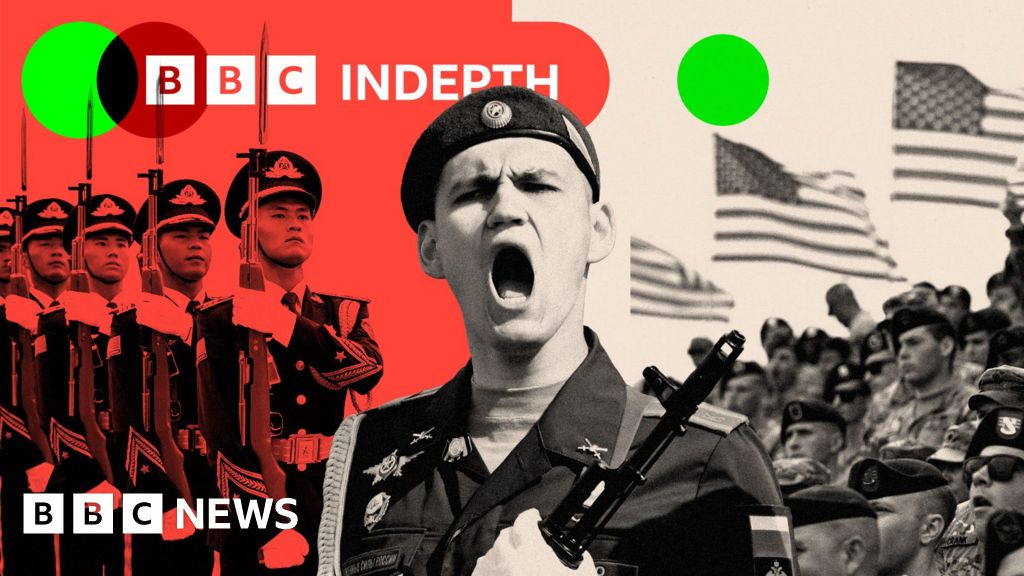
Veteran foreign correspondent John Simpson argues that the wars in Ukraine, Gaza and Sudan, combined with rising great-power rivalry, make 2025 one of the most dangerous years for global security in his six decades of reporting.
Why This Matters
Simpson, a long-time world affairs editor for a major UK broadcaster, has covered more than 40 wars since the 1960s. In his latest essay, he says he has never seen a year as worrying as 2025. His concern is not only the human cost of multiple conflicts, but how they interact with deeper shifts in power between democracies and authoritarian states.
He highlights three core fronts: Russia’s war in Ukraine, Israel’s war in Gaza, and the civil war in Sudan. Each is brutal in its own right. Together, he argues, they strain international institutions, stretch Western political will, and create openings for Russia and China to press their strategic ambitions in Europe and around Taiwan.
Simpson also points to a more inward-looking United States, which he compares to the interwar period of the 1920s and 1930s. If Washington becomes less willing to defend Europe or Ukraine, he warns, European countries may face a heavier security burden just as Russia signals it is ready to assert itself more aggressively. For readers, this is less about distant battlefields and more about the stability of the post-Cold War order that has shaped daily life for decades.
Key Facts & Quotes
In his column, Simpson says the year has been defined by three different wars. In Ukraine, he cites United Nations estimates that around 14,000 civilians have died since Russia’s full-scale invasion began in 2022. Ukraine’s President Volodymyr Zelensky has warned that the conflict could escalate into a world war, a concern Simpson says he shares after almost 60 years covering conflicts.
John Simpson: ‘I’ve reported on 40 wars but I’ve never seen a year like 2025’ #HackerNewshttps://t.co/Wh3iR6Eyre pic.twitter.com/gVRELf0KVq
— HackerNewsTop5 (@hackernewstop5) December 29, 2025
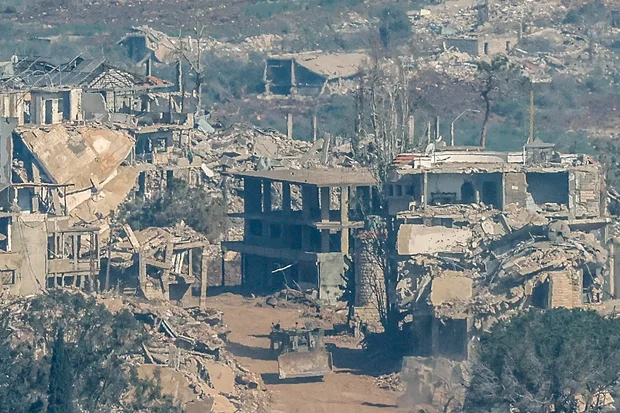
In Gaza, he notes that about 1,200 people were killed and 251 taken hostage in the 7 October 2023 Hamas attack on Israel. In response, he writes, more than 70,000 Palestinians have been killed by Israeli military action, including over 30,000 women and children, according to Gaza’s Hamas-run health ministry, figures he says the UN treats as broadly reliable. In Sudan, he describes a “ferocious” civil war between rival military factions that has killed more than 150,000 people over recent years and forced around 12 million from their homes.
Simpson also warns about what he describes as Russia’s “hybrid” tactics against the West. He says NATO governments are on alert over possible threats to undersea cables that carry internet and financial traffic, as well as drone probes of NATO defences and cyber attacks on ministries, emergency services and major companies. He recalls the UK inquiry into the 2018 Salisbury nerve-agent attack on former Russian spy Sergei Skripal and the fatal poisoning of Dawn Sturgess, which concluded the operation was approved at the highest levels of the Russian state.
Looking ahead, he writes that Russia may test Europe further if it judges the United States to be less committed to NATO. Citing Russian President Vladimir Putin, Simpson notes a recent statement that Russia is not planning war with Europe but is “ready right now” if Europeans want it, followed by another remark: “There won’t be any operations if you treat us with respect, if you respect our interests just as we’ve always tried to respect yours.”
Beyond Europe, Simpson points to China’s long-term goal of bringing Taiwan under its control. He recalls that in 2023, CIA Director William Burns told U.S. lawmakers that President Xi Jinping had ordered China’s military to be ready to invade Taiwan by 2027. Simpson suggests that if Beijing fails to act in some decisive way by then, Xi may fear looking weak at home, where public opinion is closely watched by Chinese leaders, especially since the 1989 Tiananmen Square crackdown.
Simpson argues that, taken together, these trends could amount to a new kind of world war – not necessarily a nuclear exchange, but a prolonged struggle involving cyber attacks, diplomatic pressure and proxy conflicts. “If you thought World War Three would be a shooting-match with nuclear weapons, think again,” he writes, warning that such a process could fragment the Western alliance and allow autocracies to gain ground.
What It Means for You
For people far from the front lines, Simpson’s assessment points to a world where geopolitical risk is no longer background noise. Energy prices, inflation, supply chains and digital connectivity all depend on stable relations between major powers and functioning global infrastructure. Disruption to undersea cables, for example, could affect banking, healthcare systems and communications in everyday life.
The essay also underscores how U.S. political choices and European defence spending may shape the wider security environment over the next few years. If Washington steps back and Europe is slow to fill the gap, countries on NATO’s eastern flank and partners like Ukraine could face greater vulnerability, with knock-on effects for migration, markets and global news headlines.
Simpson’s central message is that the current mix of wars and rivalries is unusually volatile, and that 2026 could be a pivotal year in determining whether tensions are contained through diplomacy or drift toward a more fragmented, authoritarian world order.
Sources
Column by John Simpson, veteran foreign correspondent and world affairs editor for a UK broadcaster, published 29 December 2025; public casualty and displacement figures cited in that column from the United Nations and Gaza health authorities; earlier testimony by CIA Director William Burns to U.S. lawmakers in 2023 regarding China’s timeline for potential action against Taiwan; and public remarks by Russian President Vladimir Putin in 2024 on relations with Europe, as reported in official transcripts and international coverage.
How worried are you that today’s overlapping conflicts and great-power tensions could reshape everyday life in the next few years?