TL;DR
More than 40 million people from Maryland to Maine are under blizzard warnings as a powerful winter storm brings 1 to 2 feet of snow, fierce winds, flooding risks, and sweeping travel bans.
Why This Matters
This winter storm is one of the most significant to hit the Northeast in years, affecting a densely populated corridor that is home to major U.S. cities, financial centers, and transport hubs. When more than 40 million people fall under blizzard warnings at once, the impacts tend to go far beyond snow totals.
Heavy snow and wind can shut down highways, delay emergency response, and disrupt power for days. With states of emergency declared across much of the region, this system is already triggering school closures, business shutdowns, and thousands of flight cancellations, stranding travelers across the country.
There is also a risk of coastal and urban flooding in parts of New York, New Jersey, and Massachusetts, where rain, wet snow, and high winds can overwhelm drainage systems and push water into low-lying communities. For many residents, especially older adults or those with medical needs, the combination of dangerous travel, cold temperatures, and possible power outages can create serious challenges.
This storm also comes on the heels of a previous cold wave linked to at least 19 deaths, underscoring how repeated severe weather events can compound risks over a single winter.
Key Facts & Quotes
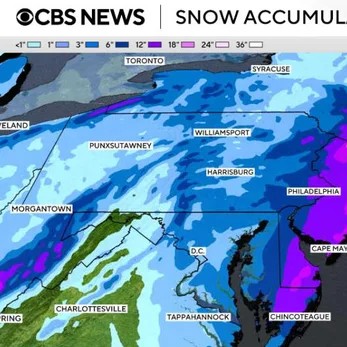
Forecasters say the storm is delivering what could be the biggest snowfall in nearly a decade for parts of the Northeast, with 12 to 24 inches expected in many areas, according to the National Weather Service. Blizzard warnings stretch from Maryland to Maine, an unusually wide area for such intense conditions in a heavily populated region, meteorologists said.
Eight states have declared states of emergency, and several major cities have enacted additional restrictions. Nonessential travel has been banned in New Jersey and New York City for the height of the storm, with a citywide travel ban in New York in effect through noon Monday.
A historic blizzard has shut down parts of the US East Coast with 70mph winds and whiteout conditions, leading to travel bans in New York and Connecticut.https://t.co/JnnMHAnAmx
Follow EyeOnLondon for more.#blizzard #eastcoast pic.twitter.com/3gZ81LD9TY
— Eye On London (@eyeonlondon_) February 23, 2026
New York City officials said schools are closed on Monday and urged residents to avoid going out unless absolutely necessary. Mayor Zohran Mamdani told residents to “stay inside and off the roads for the duration of the storm,” as the city deployed more than 700 salt spreaders and converted over 2,000 sanitation trucks into snowplows.
Massachusetts Governor Maura Healey declared a state of emergency and activated 200 National Guard members to help with storm response and potential rescues. Airlines have canceled thousands of flights across the region, according to airport and airline statements, as strong winds and heavy snow reduce visibility and make runway operations difficult.
The National Weather Service defines a blizzard as snow or blowing snow reducing visibility to a quarter mile or less for at least three hours, with sustained winds of 35 mph or higher, or frequent gusts to that level. Forecasters also warn of flooding in parts of New York, New Jersey, and Massachusetts, especially in coastal and low-lying neighborhoods.
Officials note that at least 19 people died during brutally cold weather after the last major storm this season, a reminder of the lingering dangers once the snow stops falling.
What It Means for You
If you live anywhere along the Mid-Atlantic or Northeast corridor, this storm may affect your daily life even if your town does not see the highest snow totals. Expect hazardous travel conditions, possible power outages, and delays to deliveries, medical appointments, and public transit.
Officials are urging residents to stay off the roads during the worst of the storm and to check on neighbors, especially older adults or those with limited mobility. Having basic supplies on hand-medications, flashlights, batteries, nonperishable food, and warm clothing-can make it easier to ride out short-term disruptions.
For those traveling, continued flight cancellations and rail slowdowns are likely, and rebooking options may be limited. In the coming days, pay attention to local updates on road conditions, school and workplace schedules, and any extended states of emergency as communities dig out and assess damage.
What do you think is the most important step communities should take to better prepare for major winter storms like this one?
Sources: National Weather Service forecasts and public advisories; statements from New York City and Massachusetts state officials, Feb. 23, 2026.