Why This Matters
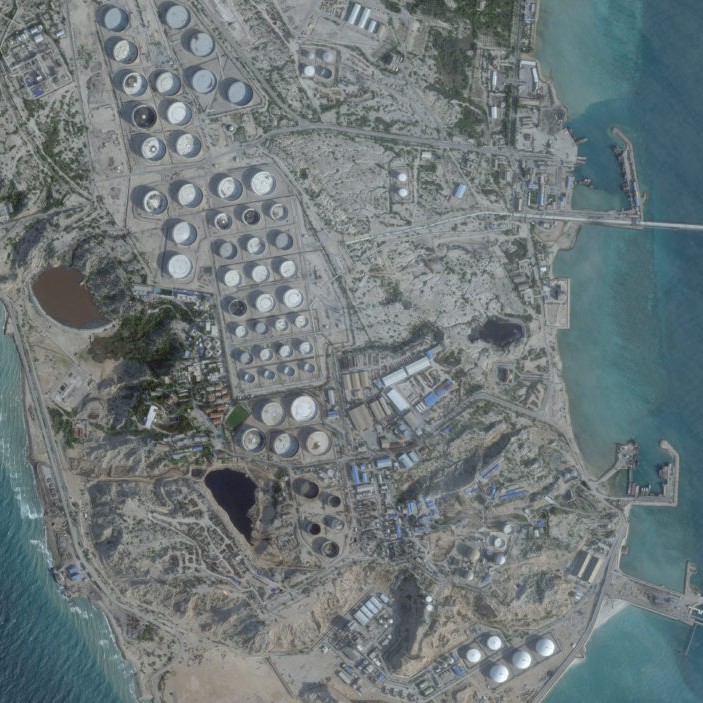
Kharg Island sits at the heart of Iran’s oil industry, handling nearly all of the country’s crude exports. As the month-old war launched by the United States and Israel against Iran expands, the small Gulf island has become a potential target whose fate could ripple through the global economy.
Any strike on Kharg’s oil terminal, or a ground invasion of the island, could sharply cut Iran’s exports and remove even more crude from world markets. That would likely push already high energy prices even higher, adding pressure on inflation, household budgets, and growth worldwide.
The island’s vulnerability also raises the risk of a wider regional conflict. Iran has warned it could hit Gulf Arab infrastructure in response, and the United States has deployed thousands of troops and Marines to the area. Miscalculations around these small but strategically located islands near the Strait of Hormuz could draw in more countries and escalate the war.
Key Facts and Quotes
Kharg Island is a small coral outpost in the Persian Gulf, about 33 kilometers (21 miles) off Iran’s coast. According to reporting carried by PBS NewsHour, it houses the export terminal through which nearly all of Iran’s oil leaves the country, much of it bound for China. Despite the conflict and repeated attacks that have disrupted traffic, Iran has continued to move oil through the nearby Strait of Hormuz.
One island quietly controls Iran’s oil lifeline.
Kharg Island sits in the Persian Gulf, feeding exports through the Strait of Hormuz.
If Hormuz is the gate,
Kharg is the valve.Touch it—and the global oil market reacts instantly. 🛢️🔥#Geopolitics #Iran #Oil #EnergySecurity… pic.twitter.com/dWFvdQMcqr
— Himanshu Jain (@HemanNamo) March 30, 2026
The Associated Press reports that U.S. President Donald Trump said mid-March strikes “obliterated” Kharg’s military assets but left its oil infrastructure intact. He has warned that if Iran continues to disrupt shipping through the strait, he may reconsider that decision. In an earlier call referenced by PBS, Trump vowed, “I’ll knock the hell out of it” if he decided Kharg needed to be hit again.
Military planners warn that any U.S. occupation of Kharg would put American troops in fixed positions within easy range of Iran’s missiles and drones. A sustained ground presence on the island could therefore become a high-risk commitment, exposing U.S. forces to continuous attack while turning the island into a focal point of the wider war.
Other nearby islands are also in play. Abu Musa and the Greater and Lesser Tunb islands, which guard the approach to the Strait of Hormuz, are controlled by Iran but long claimed by the United Arab Emirates, a close U.S. partner. Iran seized them in 1971 after British forces left the region and maintains garrisons and military assets there. To the east, Qeshm Island, home to about 150,000 people, was the site of a reported strike on a desalination plant on March 8, according to Iranian officials, a claim Washington has not confirmed.
What It Means for You
For consumers, the main risk is further spikes in energy costs. Any serious damage to Kharg’s terminal, or a broader fight over islands along the Strait of Hormuz, could constrain global oil supplies. That would likely raise gasoline and diesel prices, affect airline fares and shipping costs, and add strain to an already fragile global economy.
For investors, policymakers, and retirees watching their savings, this standoff is a key driver of market volatility. Developments to watch include any new strikes around Kharg and neighboring islands, changes in shipping flows through the Strait of Hormuz, and signs of diplomatic efforts to de-escalate. How these pressures are managed will shape everything from fuel prices at the pump to inflation and interest rates in the months ahead.
As tensions rise around critical energy routes like Kharg Island and the Strait of Hormuz, what kinds of diplomatic steps do you think world leaders should prioritize to prevent a wider war?
Sources
- Associated Press reporting by Sam Metz, carried by PBS NewsHour, March 30, 2026.