TL;DR
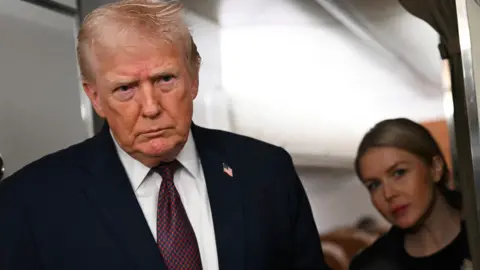
President Donald Trump is weighing military, cyber and diplomatic responses after a violent crackdown on protesters in Iran, as senior advisers split over how hard to hit back and Tehran threatens to retaliate.
Why This Matters
The decision facing the White House goes beyond a single crisis. How the United States responds to Iran’s crackdown on protesters will shape Washington’s broader role in the Middle East, its credibility on human rights and its willingness to use force after years of conflict in the region.
According to public briefings and pooled media reports, Trump has signaled a readiness to act, citing past operations against Iran’s nuclear infrastructure and a recent mission in Venezuela that led to the capture of Nicolas Maduro. Any new strike, however limited, could invite missile or proxy attacks on U.S. forces, partners and energy infrastructure across the region.
For U.S. allies in Europe and the Gulf, the decision will test coordination on Iran’s nuclear program and regional security. For Iran’s leadership, it is a moment to gauge how far Washington is prepared to go to support protesters and constrain Tehran’s military capabilities. For ordinary Americans, the outcome could affect oil prices, global markets and the risk of another prolonged confrontation far from home.
Key Facts & Quotes
Ten days ago, Trump said the United States was prepared to go to the “rescue” of Iranian protesters if the government used violence against them, declaring the country was “locked and loaded and ready to go,” according to reporters traveling with him. Since then, accounts of a harsh crackdown have emerged despite an internet blackout inside Iran.
▫ Iran Set For War But Open To Talks After Crackdown
▫The comments came after President Trump said he was “ looking at some very strong options”
▫@aurelienbrd & Sanam Mahoozi
▫https://t.co/AZRcGJjQdv@nytimes #frontpagestoday #USA 🇺🇸 pic.twitter.com/dkkqkA1jcR— 𝙵𝚛𝚘𝚗𝚝 𝙿𝚊𝚐𝚎𝚜 𝚃𝚘𝚍𝚊𝚢 📰 (@ukpapers) January 13, 2026
Senior national security officials are expected to brief the president on options that range from renewed long-range airstrikes-similar to last summer’s B-2 bomber missions against key nuclear facilities-to more targeted action against units involved in the repression. Defense officials have also discussed cyber operations and psychological campaigns designed to disrupt Iran’s command structures.
Some in Trump’s inner circle are urging restraint. Vice President JD Vance has called for prioritizing negotiations on Iran’s nuclear program, saying the “smartest thing” would be “a real negotiation with the United States about what we need to see when it comes to their nuclear program.” White House Press Secretary Karoline Leavitt has stressed that “diplomacy was always the first option,” while also insisting that “nobody knows what President Trump is going to do except for President Trump.”
Others argue time is running out. Reza Pahlavi, the exiled son of Iran’s last monarch who has positioned himself as a potential transition leader, told a U.S. broadcaster that “the best way to ensure that there will be less people killed in Iran is to intervene sooner… so this regime finally collapses.”
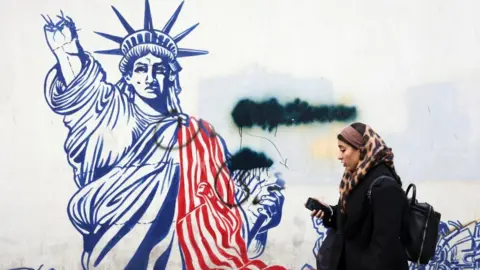
Iran, for its part, has warned it will respond to any U.S. attack. Despite earlier Israeli and American strikes, Tehran still fields a sizable arsenal of ballistic missiles, and allied groups such as Yemen’s Houthis and Shiite militias in Iraq retain the capacity to target U.S. interests and partners in the region.
What It Means for You
For many Americans, especially those with family in the military or ties to the Middle East, the coming days could determine whether the United States edges closer to another major confrontation. Even a limited U.S. strike could trigger retaliation that puts U.S. troops, embassies and shipping in the region at greater risk.
Energy markets often react quickly to tensions with Iran, a key player near vital oil and shipping routes. That means gas prices and retirement portfolios could feel the impact of any escalation, even if fighting remains far from U.S. shores. The administration’s choice may also influence domestic debates over America’s global role, the balance between defending human rights and avoiding new wars, and how future presidents handle crises involving nuclear-sensitive states.
As the White House weighs its response, members of Congress, U.S. allies and the Iranian diaspora will be pressing their own preferences-from aggressive intervention to a diplomacy-first approach. What kind of U.S. response, if any, do you think best balances support for Iranian protesters with avoiding a wider regional war?
Sources
Based on public statements by President Donald Trump, White House Press Secretary Karoline Leavitt, and Vice President JD Vance to reporters traveling with the president and in Washington in early January 2026; on-air remarks by Reza Pahlavi; and background briefings by senior U.S. defense officials as described in pooled media reports on January 13, 2026.