TL;DR
NASA delayed a Thursday spacewalk outside the International Space Station after a medical concern involving one astronaut. The crew member is stable, and officials are reviewing options for the current Crew 11 mission before setting a new date.
Why This Matters
Spacewalks are among the most complex and risky tasks astronauts perform, supporting power, communications and research systems that keep the International Space Station (ISS) operating. Postponing one for health reasons highlights how much emphasis mission teams place on crew safety, even when schedules are tight.
The delay also draws attention to how medical issues are handled in orbit. Astronauts live and work hundreds of miles above Earth, where even routine health questions require careful planning, remote diagnosis and sometimes changes to major operations. NASA must balance transparency with the privacy rights of its crews, which is why the agency did not identify the person or describe the condition.
Crew 11, made up of U.S., Japanese and Russian spacefarers, is due to stay on the ISS until their replacements arrive, with the station relying on them for daily maintenance and experiments. Any adjustment to their mission timeline could affect future launches, science schedules and international planning for the outpost, a symbol of long-running cooperation in space.
Key Facts & Quotes
NASA said late Wednesday that a spacewalk planned for Thursday outside the ISS was called off because of a medical concern involving one crew member. The person was not named, and no diagnosis was given, in line with medical privacy rules.
In an update issued shortly before midnight, the agency said it was examining all options, including the possibility of an earlier end to Crew 11’s mission. NASA added, These are the situations NASA and our partners train for and prepare to execute safely. We will provide further updates within the next 24 hours. Officials also stressed that the matter involved a single crew member who is stable.
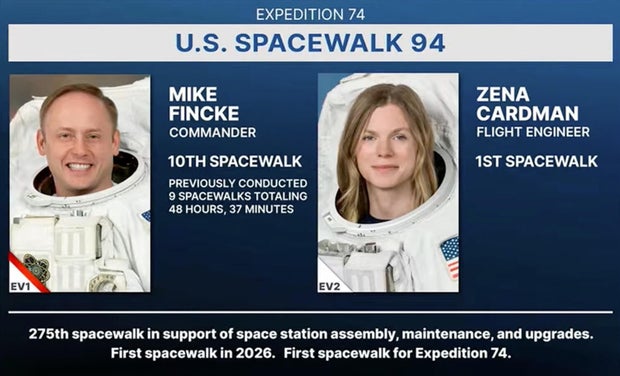
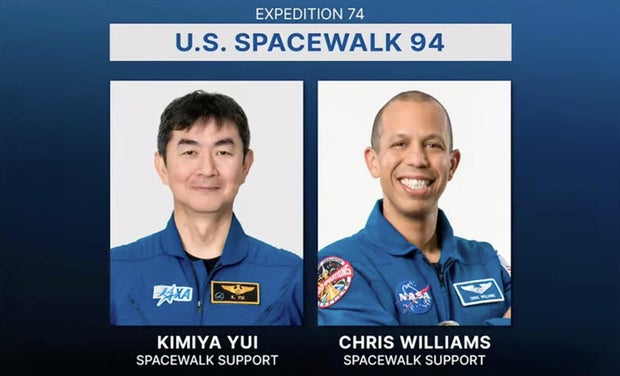
The current ISS crew launched on August 1 aboard a SpaceX Crew Dragon spacecraft. The group includes station commander Mike Fincke, flight engineer Zena Cardman, Japanese astronaut Kimiya Yui and Russian cosmonaut Oleg Platonov. They had been expected to stay in orbit until mid-February, with a return to Earth around February 20 still listed as the official plan.
Fincke, 58, a veteran of nine earlier spacewalks, and Cardman, 38, were scheduled to go outside Thursday to complete assembly of a truss structure for roll-out solar arrays and perform other maintenance. A second spacewalk, using a different pair of astronauts, had been planned for next week.
Earlier Wednesday, a brief space-to-ground radio conversation offered a glimpse into the situation. Yui called mission control in Houston to request a private medical conference, or PMC, over a secure channel and asked if a flight surgeon was available and whether controllers had a live internal camera view of the station. Shortly afterward, the agency’s normally continuous ISS audio feed went silent without public explanation.
What It Means for You
For most people on the ground, the immediate impact of this latest update is limited. The ISS remains staffed and functioning, and NASA has said the affected astronaut is stable. However, delays like this show how space agencies prioritize health and safety above keeping to a planned calendar.
Changes to spacewalk schedules can eventually influence when new solar panels are installed, when experiments are maintained and how future crew rotations are timed. For taxpayers and space enthusiasts, it is a reminder that human spaceflight carries real risks and that mission teams will slow down or rearrange high-profile operations when a crew member’s well-being is in question.
As NASA prepares for more ambitious missions, including planned trips to the Moon and eventually Mars, how it manages and communicates in-flight medical issues on the ISS offers an early look at what long-duration deep space missions may require.
Sources: NASA public statements and International Space Station mission audio on January 8, 2026.
How transparent do you think space agencies should be about in-flight medical issues while still protecting astronauts’ privacy?