Why This Matters
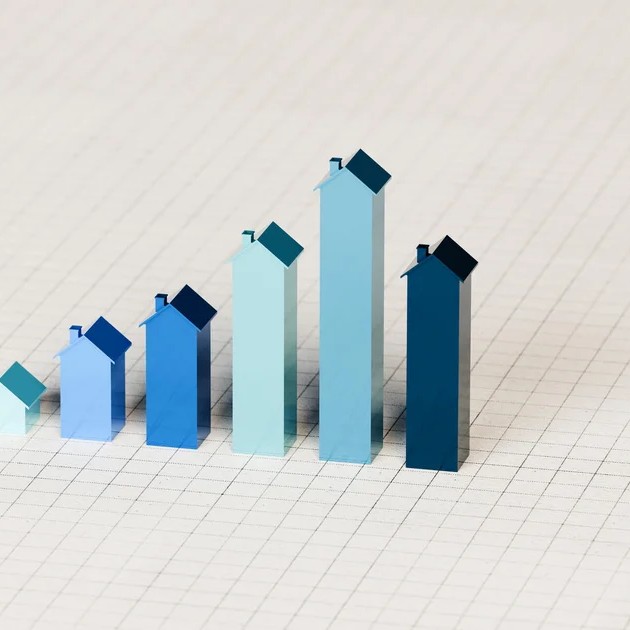
A new analysis of federal data finds that upper-middle-class households now make up the largest income group in the United States, surpassing the traditional middle class. The study, from the nonpartisan American Enterprise Institute, says roughly 31% of households fall into this category, up about threefold since 1979.
This shift changes how economists, policymakers, and families themselves think about the “middle class” and the American dream. It helps explain why many indicators show rising incomes, even as polls find people worried about housing, health care, and other basic costs.
The trends also feed into a more divided, “K-shaped” economy, where higher-income households spend more freely while lower-income families pull back. That gap can influence everything from which stores and services survive in a community to how voters respond to inflation and tax proposals.
Key Facts and Quotes
The AEI report, based on U.S. Census data from 1979 through 2024, defines the upper middle class as a family of four earning between about $153,864 and $461,592 a year. Above that, a “rich” group now accounts for about 3.7% of households, roughly 12 times the share seen in 1979, according to the researchers.
At the same time, the share of Americans in what the study calls the “core” and “low” middle class has fallen, largely because more households have moved up the income ladder. “The whole distribution of Americans, from poor to rich, has done better over time,” co-author Scott Winship, a senior fellow at AEI, told CBS News, adding that shrinking middle-class shares reflect higher incomes rather than a broad decline.
Researchers link much of the change to the rise of two-earner households and major gains for women in the workforce. In 1970, about 11% of women had college degrees, according to the Bureau of Labor Statistics. Today, roughly 40% do, and higher education is closely tied to higher lifetime earnings. “The additional opportunities that women have are a big part of the story,” Winship said, noting that many families have chosen to work more in exchange for higher living standards.
Still, the findings appear to clash with how many people feel about their finances. A recent CBS News poll found that most Americans say it is harder now to buy a home, get a good job, or raise a family than it was for earlier generations. Winship argues people tend to rate their own situation more positively than the national economy, yet acknowledges that key basics such as housing, college, and health care have risen much faster than overall inflation. “There’s a tendency to focus on the three or four big-ticket items that have gotten a lot more expensive,” he said, even as many other goods have become cheaper.
What It Means for You
For families, the study highlights a reality many already sense: the income needed to feel securely “middle class” has moved higher, and it varies widely by region. A household that qualifies as upper middle class on paper may still feel squeezed if it faces high housing costs, child care bills, or medical expenses.
For taxpayers and voters, the shift could influence debates over tax brackets, student debt, housing policy, and who should qualify for government benefits or subsidies. As more households enter higher-income tiers, questions about the cost of living, regional disparities, and how to measure economic well-being are likely to play an even bigger role in national and local elections.
Sources
American Enterprise Institute report “The middle class is shrinking because of a booming upper middle class” by Scott Winship and colleagues, using U.S. Census data from 1979-2024 (2024); CBS News MoneyWatch article by Aimee Picchi on upper middle class growth and economic perceptions (April 6, 2026); U.S. Bureau of Labor Statistics data on women’s educational attainment (accessed 2024); CBS News national polling on Americans’ views of economic conditions and generational comparisons (2026).
How do these findings line up with your own sense of what it now takes to feel securely “middle class” in America?