TL;DR
President Trump’s proposed 10% tariffs on eight European allies over Greenland trigger rare transatlantic backlash, raising legal, economic and security issues.
Why This Matters
The dispute over Greenland has quickly moved from an unusual diplomatic row into a wider test of U.S. relations with key European allies. President Donald Trump’s plan to impose 10% tariffs on eight NATO partners, in response to their opposition to U.S. control of Greenland, pulls together trade policy, military alliances and Arctic security in one high-stakes confrontation.
The Arctic region is becoming more important as melting ice opens new sea routes and access to minerals and energy resources. Greenland, an autonomous territory within the Kingdom of Denmark, hosts critical air and radar facilities that support U.S. missile warning systems and NATO operations. Any breakdown in cooperation around Greenland could create openings for Russia and China, which are already seeking greater economic and military influence in the Arctic.
For the United States, this latest update in global news raises questions about how far a president can use tariffs for geopolitical goals and how allies may respond. For Europe, it tests the ability of NATO members and the European Union to stay unified when security and trade collide.
Key Facts & Quotes
President Trump announced that Denmark, Norway, Sweden, France, Germany, the United Kingdom, the Netherlands and Finland will face a 10% tariff after opposing U.S. control of Greenland. Several of these countries recently sent small contingents of troops to Greenland for what they describe as Arctic security training exercises.
Canada plans to send soldiers to Greenland as show of NATO solidarity with Denmark: https://t.co/EIf9OHJz7s pic.twitter.com/DfGJt95e0z
— Mark Kersten || @markkersten.bsky.social (@MarkKersten) January 19, 2026
The eight affected nations released a joint statement saying the Danish-led exercise “poses no threat to anyone” and stressing that they are “committed to strengthening Arctic security as a shared transatlantic interest.” They warned that tariff threats “risk a dangerous downward spiral” in relations and said they would remain “united and coordinated in our response.”
A European diplomatic source said France is urging European partners to prepare defensive steps, including use of the European Union’s Anti-Coercion Instrument, sometimes called a trade “bazooka,” which can curb imports of U.S. goods and services. How such measures might apply is unclear because the EU is a single trading bloc while Norway and the U.K. are outside it.
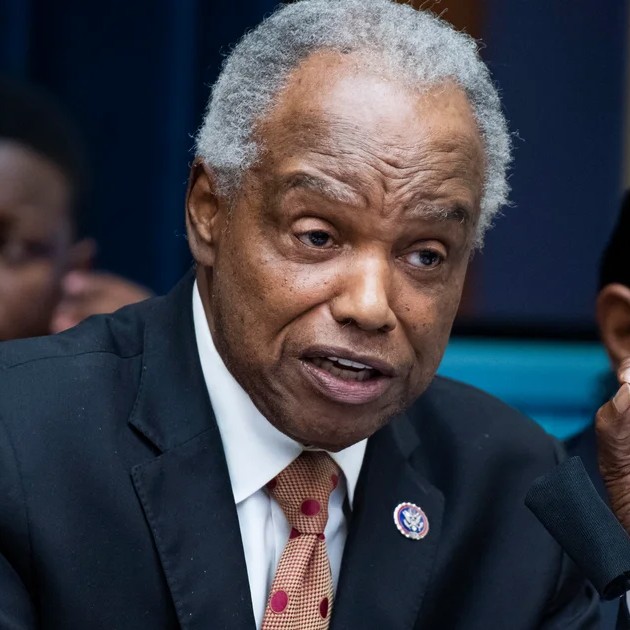
Legal questions also loom in Washington. Lawmakers from both parties have questioned whether emergency economic powers, currently under Supreme Court review, would allow tariffs aimed at pressuring other countries to sell territory. Republican Representative Mike Turner said he does not believe a president can impose tariffs “for the purposes of compelling other nations to sell the United States land.”
European Union foreign policy chief Kaja Kallas warned that China and Russia could benefit from the rift, saying on social media that if Greenland’s security is at risk, it “can be addressed inside NATO” and that tariffs “risk making Europe and the United States poorer.”
Criticism at home has also been sharp. Democratic Senator Mark Warner said “the only country that’s frankly benefiting the most from this chaos are both Russia and China,” adding there is “no current security threat from Russia or China to Greenland.” Senator Mark Kelly argued the proposed tariffs would make Americans “pay more to try to get territory we don’t need.”
Some of Trump’s usual allies in Europe pushed back as well. Italy’s Prime Minister Giorgia Meloni called the tariffs “a mistake,” saying European troop deployments in Greenland were meant to guard against unnamed “other actors,” not the United States. In Britain, leaders across the political spectrum, including Reform UK’s Nigel Farage and Prime Minister Keir Starmer, criticized the tariff plan; Starmer called it “completely wrong” and said his government would raise it directly with Washington.
A new national poll released Sunday found strong public resistance to any U.S. move to acquire Greenland by purchase or force: 70% of respondents opposed using federal funds to buy the territory, and 86% opposed seizing it militarily.
Sources: Public statements and social media posts by President Donald Trump, European and U.K. leaders, and U.S. lawmakers on Jan. 18-19, 2026; national polling data released Jan. 18, 2026.
What It Means for You
For most Americans, the immediate question is what this could mean for prices and pensions in an already uncertain economy. If the tariff dispute escalates into a broader trade conflict with Europe, it could affect the cost of imported goods, from cars and machinery to wine and household products, and may trigger counter-tariffs on U.S. exports such as farm goods and manufactured equipment.
Beyond household budgets, the dispute touches on long-term security. NATO has anchored U.S. strategy in Europe and the North Atlantic for decades; sustained friction with key allies could complicate joint responses to crises involving Russia, China or the Arctic. Voters may also see this as another test of how presidents use trade tools to pursue foreign policy goals, a topic likely to feature in upcoming campaigns. As this story develops, how should the United States balance tough bargaining with allies against the risks to economic stability and long-standing security partnerships?