Why This Matters
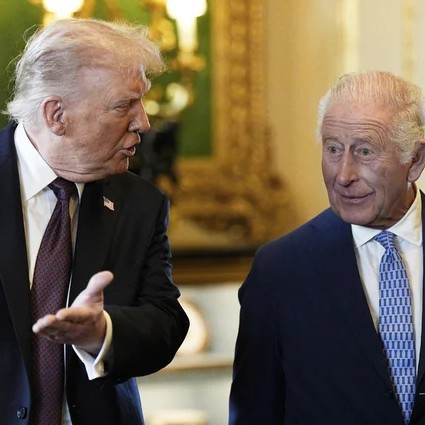
King Charles III is making a state visit to the United States this week, his first since becoming monarch in 2022. The trip, which includes Washington, D.C., and New York City, underscores the durability of the U.S.-U.K. alliance amid global tension and political change in both countries.
State visits are highly choreographed but carry real diplomatic weight. They signal which partnerships world leaders consider essential, create space for private talks on security and economic issues, and project shared values to global audiences.
Royal visits in particular have been used for nearly a century to put a human face on the so-called “special relationship.” From pre-World War II charm offensives to Cold War pageantry and modern pop-culture moments, these trips help maintain familiarity between two nations that once fought a war for independence.
Key Facts and Quotes
According to reporting from CBS News, King Charles and Queen Camilla are scheduled to be in the U.S. from Monday through Thursday. On Tuesday, Charles is expected to address a joint meeting of Congress and attend a White House banquet, before the royal couple travels to New York City on Wednesday.
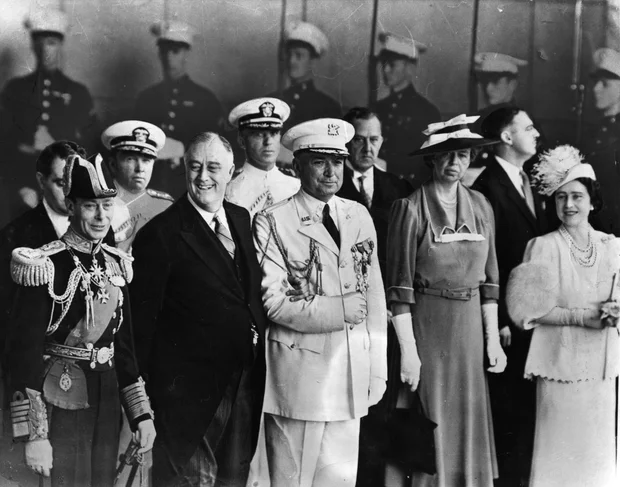
The first official state visit by a reigning British monarch came in June 1939, when King George VI and Queen Elizabeth traveled to Washington, D.C., shortly before World War II. During a picnic hosted by President Franklin D. Roosevelt, the king famously tried a hot dog for the first time, a small but memorable symbol of cultural outreach.
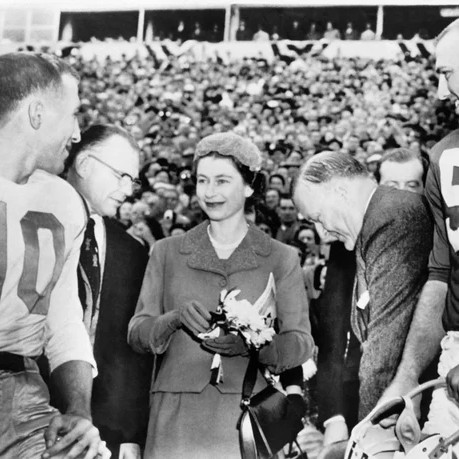
In 1951, then-Princess Elizabeth and Prince Philip visited the Truman administration, staying at Blair House while the White House was under renovation. The future queen presented President Harry Truman with a 17th-century framed mirror, an oil painting, and a candelabra. By 1957, as Queen Elizabeth II, she returned for a formal state visit marking the 350th anniversary of the Jamestown settlement.
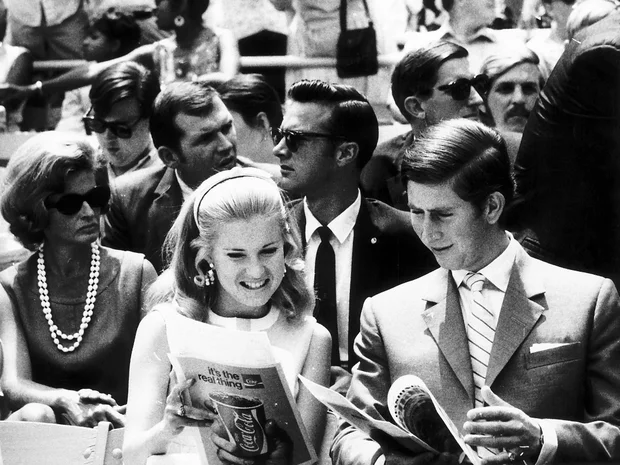
The 1960s and 1970s saw a steady tempo of royal diplomacy. Princess Margaret’s 14-day U.S. tour in 1965 included a White House dinner with President Lyndon B. Johnson and a stop in Hollywood, where she met director Alfred Hitchcock. In 1970, a 21-year-old Prince Charles made his first official U.S. visit, meeting President Richard Nixon, attending a state dinner, and taking in a baseball game with Tricia Nixon.
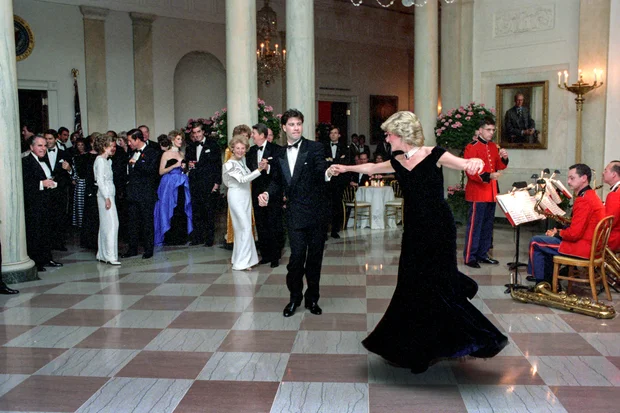
Queen Elizabeth II’s 1976 state visit coincided with America’s bicentennial, a pointed moment of reconciliation as she joined President Gerald Ford at a White House dinner and laid a wreath at Arlington National Cemetery. In 1985, Prince Charles and Princess Diana met President Ronald Reagan, and Diana’s dance with actor John Travolta at a White House gala became an enduring image of soft-power diplomacy.
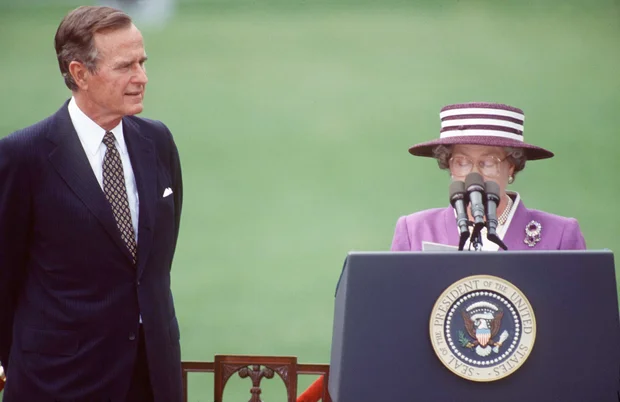
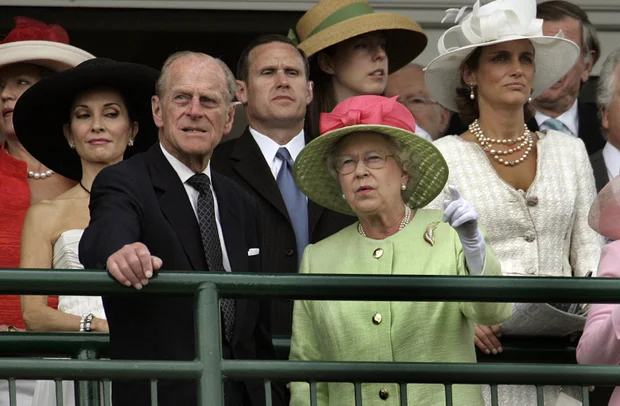
The queen returned again in 1991 for a state dinner with President George H. W. Bush and delivered what became known as the “talking hat” speech when the lectern obscured her face. Addressing Congress two days later, she joked, “I do hope you can see me today.” Her final official U.S. visit was in 2007, under President George W. Bush, and included a stop at the Kentucky Derby.
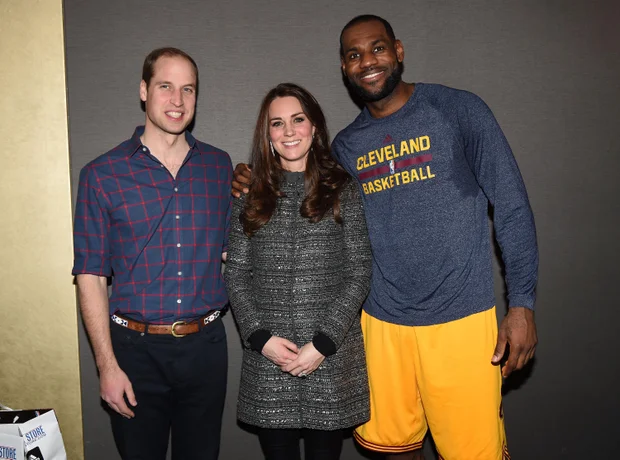
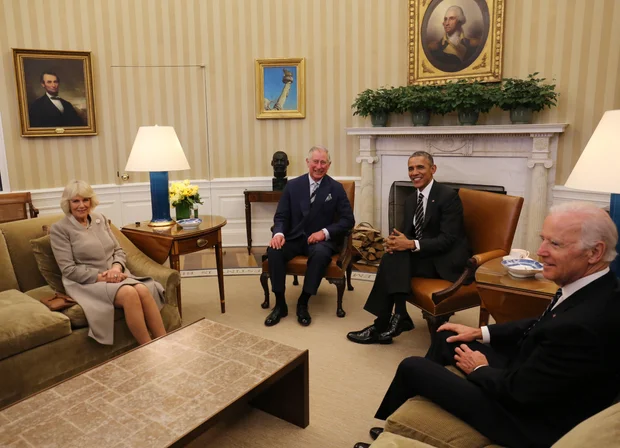
More recent trips have linked royalty with modern politics and American culture. In 2014, Prince William and Catherine visited Washington and New York, met President Barack Obama, and attended a Brooklyn Nets game where they met Jay-Z, Beyonce, and LeBron James. In 2015, then-Prince Charles and Camilla met Obama and then-Vice President Joe Biden; Obama remarked, “I think it’s fair to say that the American people are quite fond of the royal family,” according to CBS News.
In 2015, then-Prince Charles and Camilla met Obama and then-Vice President Joe Biden; Obama remarked, “I think it’s fair to say that the American people are quite fond of the royal family,” according to CBS News.
What It Means for You
For Americans, this latest state visit is unlikely to bring instant policy shifts, since the British monarch serves as head of state, not head of government. But it does offer a window into how closely Washington and London coordinate on issues such as security, the global economy, and support for international institutions.
Public events in Washington and New York, including the congressional address and White House dinner, are designed to reinforce that the U.S.-U.K. partnership extends beyond current officeholders. How the visit is framed and which themes Charles emphasizes in his speeches may offer clues about where both countries see their relationship heading next.
How do you think royal visits and other ceremonial diplomacy shape public perceptions of international relationships like that between the United States and the United Kingdom?
Sources
CBS News, “Photos show British royal visits to the U.S. through history as King Charles III makes a state visit,” April 27, 2026; Historical background on U.S.-U.K. state visits drawn from official White House and UK Royal Household archives, various years.