TL;DR
Jose Antonio Kast wins Chile’s presidency with a decisive lead, ushering in the country’s most right-leaning government since the end of military rule.
Why This Matters
Chile, long seen as one of Latin America’s most stable democracies, has chosen its most conservative president in 35 years. Jose Antonio Kast’s victory marks a sharp turn to the right after a period of left-leaning government under President Gabriel Boric and follows years of social unrest, constitutional debates, and economic uncertainty.
The result fits into a wider regional pattern in global news: voters across Latin America have been ousting incumbents and backing candidates who promise tougher policies on crime, migration, and inflation, from Argentina to other Andean nations. Chile is a key producer of copper and lithium, both crucial to the global energy transition, so policy changes in Santiago can ripple through international supply chains and investment flows.
For many Chileans, rising crime, the presence of powerful foreign gangs, and a surge in irregular migration have become immediate concerns, often outweighing debates over social rights or constitutional reform. Kast’s win shows how security and economic anxiety can redefine political priorities, even in societies that only recently expanded social protections and debated a more progressive charter.
Key Facts & Quotes
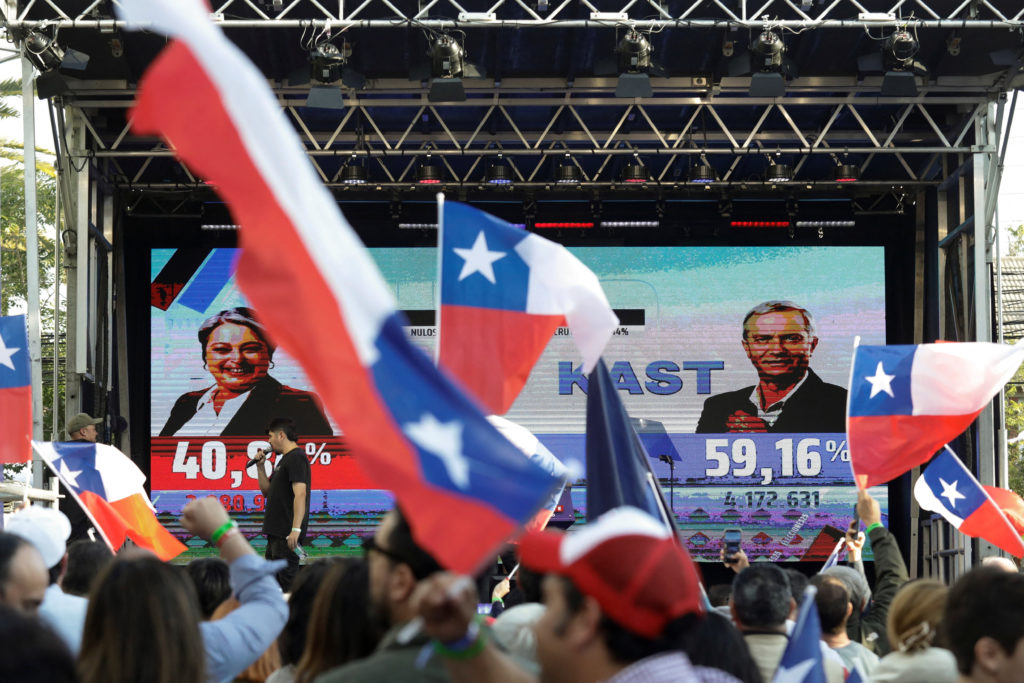
With more than 95% of ballots counted, official tallies from Chile’s electoral service show ultra-conservative candidate Jose Antonio Kast securing over 58% of the vote in Sunday’s presidential runoff. His rival, Jeannette Jara, a longtime member of Chile’s Communist Party and labor minister in President Gabriel Boric’s administration, received just over 41%.
🇨🇱 Far-right candidate Jose Antonio Kast won Chile’s presidential election in a landslide, securing 58.2% of the vote
🗳️ With 99% of ballots counted, Kast defeated Jeannette Jara, who received 41.8%
🗓️ Kast is set to assume office on March 11, 2026 pic.twitter.com/0LE2LP3Yxl
— Anadolu English (@anadoluagency) December 15, 2025
Jara acknowledged the result in a message on social media, saying democracy had spoken and confirming that she had called Kast to concede and congratulate him. According to the campaigns, Kast supporters poured into streets in Santiago and other cities, honking car horns and chanting his name as early results pointed to a clear victory.
Kast, a devout Catholic and father of nine, has campaigned on a hard line against crime and irregular migration. He has promised to deport hundreds of thousands of migrants without legal status, strengthen policing, and revive an economy that has slowed after years of strong growth. His spokesman Arturo Squella told reporters, “We are very proud of the work we’ve done. We feel very responsible for this tremendous challenge of taking charge of the crises that Chile is going through.”
Jara, who rose from a working-class background and opposed the 1973-1990 military dictatorship, framed the election as a choice over social protections. Kast, whose family history includes ties to the Pinochet-era establishment and whose father was a registered member of Adolf Hitler’s Nazi party, has drawn criticism for past expressions of admiration for former dictator Augusto Pinochet and for his unwavering opposition to abortion and same-sex marriage.
Despite those controversies, many voters rallied behind his law-and-order message amid concern over organized crime and the strain from a major influx of migrants, particularly from Venezuela and other crisis-hit countries.
What It Means for You
For U.S. readers, this is a top story not only as a sign of shifting politics abroad but also because Chile is a significant economic and diplomatic partner. Any change in Santiago’s approach to mining regulation, foreign investment, or environmental policy could affect the availability and price of key minerals used in electric vehicles, batteries, and electronics.
Kast’s emphasis on stricter border controls and crime could influence regional cooperation on migration, potentially changing routes and pressures across the Americas, including at the U.S. southern border. His government may also adjust Chile’s positions on climate commitments, trade agreements, and relations with major powers such as the United States and China.
In the months ahead, observers will watch whether Kast moderates his stances to govern a politically divided country, and how Congress, social movements, and financial markets respond. For many, what it means is a real-time test of whether tough-on-crime promises can deliver results without deepening social tensions.
Sources
Official preliminary results from Chile’s Electoral Service (Servel), Dec. 14, 2025; public statements and social media posts from Jose Antonio Kast, Jeannette Jara, and campaign representatives, Dec. 14-15, 2025; historical background from Chilean government and electoral archives.
How do you view the growing trend of voters turning to tougher law-and-order candidates when they feel insecure about crime and the economy?