TL;DR
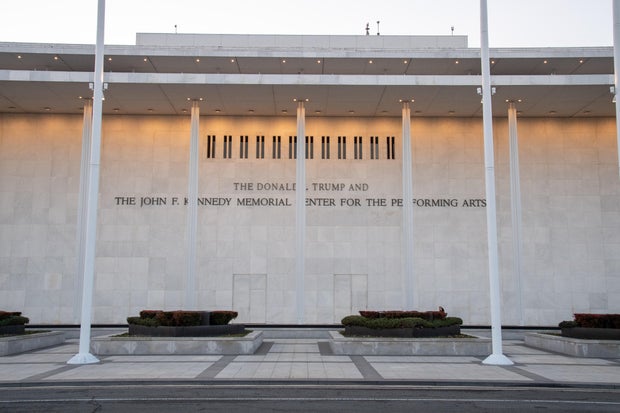
A federal lawsuit and new House bills are challenging a board decision to add Donald Trump’s name to Washington’s John F. Kennedy Center for the Performing Arts.
Why This Matters
The fight over the Kennedy Center’s name goes beyond signage on a landmark building in Washington, D.C. It touches core questions about how the United States honors past presidents, who controls national memorials, and where the line sits between public service and self-promotion.
Congress created the Kennedy Center in the 1960s as the nation’s official memorial to President John F. Kennedy, who was assassinated in 1963. That special status means any change to its name is more than a branding decision; it may test the balance of power between Congress and federally chartered cultural institutions.
The latest dispute also reflects broader tensions in U.S. politics over how historical figures are remembered, which names stay on public buildings, and how new ones are added. With a former president at the center of the controversy, the outcome could set a precedent for whether living political leaders can place their names alongside – or ahead of – those of earlier presidents on national memorials.
For arts organizations and donors, the case is being closely watched as a signal of how politics can shape governance, leadership, and public trust in major cultural venues that rely on both federal support and private contributions.
Key Facts & Quotes
In December 2025, the board of the John F. Kennedy Center for the Performing Arts voted to add former President Donald Trump’s name to the institution, which is located on the banks of the Potomac River in Washington, D.C. The move followed an earlier shake-up in which Trump removed several board members and installed close allies. The reconstituted board, made up largely of his supporters, elected him chairman in February 2025 and named longtime ally Richard Grenell interim president and executive director.
Representative Joyce Beatty, an Ohio Democrat and Kennedy Center trustee, has filed a federal civil lawsuit challenging the December vote. In her complaint, she argues that because Congress named the center in law as “The John F. Kennedy Center for the Performing Arts,” only Congress can change that name. Her filing asks a judge to declare that the board’s vote is “null and void, and without legal effect” and to affirm that the center’s name remains the original Kennedy designation.
Beatty’s lawsuit points to the center’s origins as “the sole national memorial to the late President within the nation’s capital,” and describes the December proceedings as “more reminiscent of authoritarian regimes than the American republic.” She calls the decision “a flagrant violation of the rule of law, and it flies in the face of our constitutional order,” according to the court filing.
Attorneys involved in the challenge, including Washington-based lawyer Norm Eisen, say they will seek to show not only legal violations but also financial harm. Eisen has argued that the impact goes beyond “the high cost of signage and of the other naming changes,” citing alleged losses to performers, audiences, the center’s finances, and its arts and educational mission.
The Kennedy Center, in a statement provided through a spokeswoman, defended the changes and Trump’s role, saying he “deserves credit for saving America’s cultural center after years of neglect – as the very legislators attacking him now sat idly by while the center fell into disrepair.” The cost of updated signage, website changes and other rebranding steps has not been publicly disclosed.
On Capitol Hill, several Democrats are trying to reverse the board’s move. Representative April McClain Delaney, a first-term Democrat from Maryland, has introduced a bill that would require the removal of any name or identification for the institution that differs from “John F. Kennedy Center for the Performing Arts.” In public comments promoting her bill, she said, “A president can’t enshrine himself. This is what authoritarian leaders do,” calling the renaming “arrogant” and “narcissistic.”
Icon vs Con
Take Trump’s name off the Kennedy Center pic.twitter.com/9Ck6bTEfPy
— Scott Lawrence (@Scottmusicpiano) January 20, 2026
In a separate measure, Representative Stephen Lynch of Massachusetts has introduced a House resolution seeking a formal statement that the renaming violates federal law. During a December floor speech, Representative Steve Cohen of Tennessee criticized the board’s decision as “a sacrilege to a martyred, heroic, historic American president,” adding, “The idea that Donald Trump would want his name to go before Kennedy’s – or even with Kennedy’s – is a sacrilege.”
People familiar with the case say the Trump administration’s formal response to Beatty’s lawsuit is expected by the end of February, according to the litigation timeline.
What It Means for You
For most Americans, the legal and legislative steps around the Kennedy Center may feel symbolic, but they carry practical implications. Visitors to Washington could see the center’s name and branding change again, depending on how the courts and Congress resolve the dispute. Donors, artists, and audiences may also rethink their relationship with a venue seen as both a national memorial and a working performing arts center.
More broadly, the outcome will signal how far boards of cultural institutions can go in reshaping long-standing memorials without new laws from Congress. If courts side with Beatty and her co-plaintiffs, it could reinforce congressional control over names at other national landmarks. If the board’s decision stands, future leaders might feel emboldened to pursue similar renamings or co-namings.
This latest update is part of a wider national conversation over monuments, building names, and who gets honored in public spaces. It may influence how communities across the country handle naming decisions at museums, theaters, colleges, and local memorials in the years ahead.
Sources: Federal civil complaint filed by Rep. Joyce Beatty and co-plaintiffs in U.S. District Court for the District of Columbia (January 2026); official statements and press materials from the John F. Kennedy Center for the Performing Arts (January 2026); public bill texts and summaries released by the offices of Reps. April McClain Delaney, Stephen Lynch, and Steve Cohen (December 2025-January 2026).
How do you think national memorials and cultural institutions should handle naming or renaming decisions involving living political figures?