Why This Matters
More than three decades after 13 artworks were stolen from Boston’s Isabella Stewart Gardner Museum, a former FBI agent is offering the most detailed public account yet of how investigators believe the heist unfolded and who was involved. The case, long a source of fascination and frustration, remains officially unsolved.
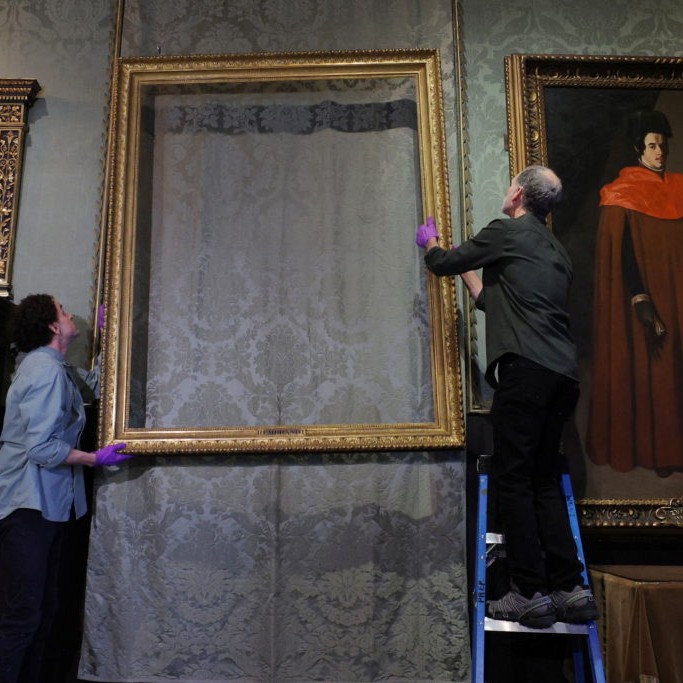
The 1990 theft, valued at more than $500 million, is widely described by investigators and the museum as the largest art heist in history. Masterpieces by Vermeer, Rembrandt, Degas, and Manet vanished in a single night, creating a cultural loss that goes far beyond their market value and still leaves empty frames hanging on the museum’s walls.
The new account by retired FBI agent Geoff Kelly, who led the investigation for more than 20 years, revisits old theories, tracks alleged movements of the art through criminal networks, and names men he believes were involved. His book arrives as law enforcement continues to seek credible tips and maintains a multi-million-dollar reward for the works’ safe return.
Key Facts and Quotes
In the early hours of March 18, 1990, as Boston wound down from St. Patrick’s Day celebrations, two men dressed as police officers arrived at the Gardner Museum and persuaded a security guard to let them in, according to contemporaneous accounts and FBI summaries. They handcuffed the guards in the basement and moved through the galleries, cutting paintings from their frames.
The thieves took Vermeer’s The Concert, Rembrandt’s Christ in the Storm on the Sea of Galilee, a Rembrandt self-portrait, works by Degas and Manet, a Chinese beaker, a bronze eagle finial from the Napoleonic era, and the museum’s security videotapes. Investigators later described the eagle finial as a puzzling choice, given its relatively modest value compared with the rest of the haul.
Kelly’s book, as described in an Associated Press report, outlines how the case initially had limited staffing, with just one agent assigned. He says securing more help and funding was difficult at a time when federal resources in Boston were focused on violent crime and drug trafficking. Kelly is quoted as saying that obtaining resources was ‘like pulling teeth,’ and he argues that this slowed the investigation’s early momentum.
Over the years, leads pointed to the Irish Republican Army, Boston organized crime figures, and alleged associates in Europe, but none produced the missing art. Kelly describes surveillance efforts in France targeting suspected Corsican mobsters, as well as informants in New England, including a terminally ill triple murderer who secretly recorded conversations. Several men long suspected of ties to the heist, including Boston mob associate Robert Donati and another alleged participant, George Reissfelder, later died, some under violent or suspicious circumstances. No one has been charged in connection with the theft, and the FBI has never publicly named suspects, although in 2013 the bureau said it believed it knew who carried out the crime.
Theories about an inside role have focused on unusual actions by one guard, Rick Abath, including opening a door against policy before the robbery and being found handcuffed in the basement with his head wrapped in tape. Abath, who died in 2024, consistently denied involvement, and investigators have never announced proof of an inside job. Kelly characterizes the stolen works as ‘perfect fugitives’ because they are instantly recognizable and nearly impossible to sell openly, and he says he has ‘no doubt they still exist.’
What It Means for You
For visitors to Boston, the Gardner Museum remains both an art destination and a crime scene in plain sight. The empty gilded frames still hanging in the Dutch Room are a daily reminder of what was taken and why the case still matters to art lovers and law enforcement alike.
Kelly’s detailed account could renew public interest and potentially prompt new tips, a result investigators have often hoped for when the case returns to the spotlight. For readers and museumgoers, the book offers a deeper look at how major cultural crimes are investigated, the limits of proof when key figures die, and the ongoing debate over how best to protect art while keeping museums welcoming and accessible.
How do you think museums and law enforcement should balance open public access with the tighter security needed to protect irreplaceable art?
Sources
Associated Press reporting by Leah Willingham, published by PBS NewsHour, April 26, 2026; Federal Bureau of Investigation public statements and background materials on the Isabella Stewart Gardner Museum theft, especially the March 2013 update; Isabella Stewart Gardner Museum public information on the 1990 theft, stolen artworks, and reward, accessed 2024.